If your Subaru Outback touchscreen is bubbling, lifting at the edges, developing “oil slick” spots, or acting like it’s being pressed by a ghost, you’re almost certainly dealing with touchscreen delamination. The good news: you can confirm the failure type quickly, avoid wasting money on the wrong repair, and choose a fix that actually lasts.
Quick Answer: What’s the Best Subaru Outback Touchscreen Fix?
If your display still turns on and the system boots normally but touch is erratic (random taps, dead zones, wrong inputs) and you see bubbles/peeling, the most reliable fix is replacing the failed touchscreen layer with a properly engineered replacement (not a cheap “same-design” part). “Temporary” solutions (heat, pressure, adhesives) rarely hold because the bonding layer has already failed.
What Touchscreen Delamination Looks Like in a Subaru Outback
Delamination is a physical separation inside the screen stack. Common signs include:
- Bubbling or blisters under the glass (often grows over time)
- Edge lifting / peeling, especially near corners
- “Oil slick” / rainbow spotting or hazy patches
- Ghost touches (random button presses, phantom swipes)
- Dead zones where touch won’t register
- Touch input offset (you press one spot, it registers somewhere else)
If you’re seeing the physical bubbles/peeling and your touch is misbehaving, that’s classic delamination-driven digitizer failure.
Why Subaru Outback Screens Delaminate
Most delamination failures come down to the bonding method and materials inside the touchscreen assembly. Over time, heat cycling (hot sun / cold nights), humidity, and normal cabin temperature swings stress the adhesive layer. Once the bond starts to separate, it doesn’t “heal” — it spreads.
This is why many “replacement” options fail again: some parts reuse the same bonding concept that failed the first time. If you’re shopping for a replacement, you want a design that specifically addresses the root cause (bonding and lamination).
Step 1: Confirm It’s Delamination (Digitizer) and Not the Radio
Before you spend money, separate a touch layer failure from a head unit / radio failure. Use this quick checklist:
Most Likely Delamination / Digitizer Failure
- Screen image is clear and stable
- System boots, audio works, backup cam works
- Touch is erratic (ghost touches, dead zones, wrong inputs)
- Visible bubbles, lifting, or “peeling” under/near the glass
More Likely Head Unit / LCD Failure
- No image / black screen / flickering lines
- Boot loops or freezes on startup
- Audio issues tied to system instability
- Touch is irrelevant because the display won’t function normally
Want a deeper diagnostic breakdown? Read: Is It the Digitizer or the Radio? How to Confirm the Real Failure.
Step 2: Choose the Right Subaru Outback Touchscreen Delamination Fix
Option A: Temporary DIY “Fixes” (Not Recommended)
You’ll see forum suggestions like heat guns, clamps, pressure pads, or injecting adhesive. These can sometimes reduce symptoms briefly, but delamination is a structural bond failure — and the screen will usually relapse.
- Heat/pressure: may flatten bubbles temporarily; failure typically returns
- Adhesive injection: messy, inconsistent, can permanently damage the LCD
- Screen protectors: cosmetic only; won’t fix ghost touch or separation
Option B: Replace the Touchscreen Layer (Best Value When the Display Still Works)
If the image is fine and the radio functions, the most cost-effective route is fixing the failed touchscreen layer (digitizer/delaminated assembly) rather than replacing the entire head unit.
- Restores normal touch responsiveness
- Eliminates ghost touches caused by delamination
- Costs far less than full head unit replacement in most cases
Option C: Replace the Entire Head Unit (Most Expensive)
Full head unit replacement is sometimes necessary if the head unit is unstable, the LCD is failing, or the system won’t boot. It’s also commonly recommended by dealerships because it’s the simplest “swap” path — but it’s usually the priciest.
Cost: Subaru Outback Touchscreen Fix vs Dealer Replacement
Pricing varies by model year, trim, and screen size, but the pattern is consistent: dealer head unit replacement is typically the highest-cost option, while fixing/replacing the failed touchscreen layer is usually the best value when the display and radio still function normally.
| Repair Path | Best For | Typical Outcome |
|---|---|---|
| DIY heat/pressure/adhesive | Short-term experimentation | Often temporary, relapse likely |
| Touchscreen layer replacement | Delamination + radio/LCD still working | Best value + durable fix (with correct design) |
| Full head unit replacement | Radio/LCD failure, boot loops, unstable system | Most expensive, “complete swap” |
How to Avoid Buying the Wrong Replacement Screen
This is where most people get burned: they buy a part that looks right but uses the same internal bonding approach that failed. Use these filters before you buy:
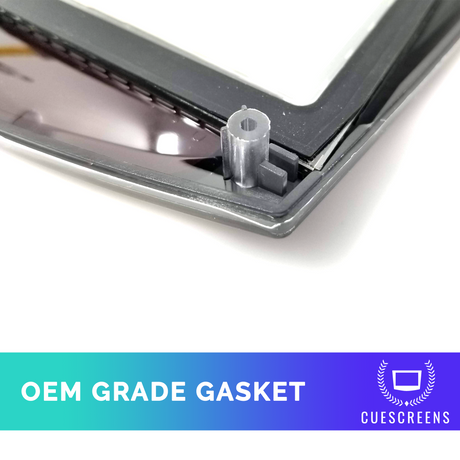
- Look for an engineered fix (not “OEM-style” bonding that repeats the failure mode)
- Check failure symptoms the part addresses (bubbles, ghost touch, peeling)
- Avoid ultra-cheap lookalikes — delamination is material/design-sensitive
- Confirm compatibility by year, trim, and screen size
If you’ve dealt with delamination on other vehicles, you’ll recognize the same pattern.
DIY Install Overview: What the Repair Process Typically Looks Like
Exact steps vary by year/trim, but most Subaru Outback touchscreen repairs follow this flow:
- Confirm symptoms (delamination + touch failure vs radio failure)
- Remove trim and access the screen/head unit assembly
- Disconnect harnesses carefully (label if needed)
- Replace the failed touchscreen layer or assembly (depending on kit)
- Reassemble, test touch response, test backup camera/audio, then button up
If your screen is actively “pressing itself,” don’t wait too long. Ghost touches can make the system unusable (changing settings, calling contacts, blasting volume), and the delamination typically spreads over time.
FAQ: Subaru Outback Touchscreen Delamination
Will delamination get worse over time?
In most cases, yes. Once the bond starts separating, heat cycling and vibration tend to expand the affected area. You may start with a small bubble and end up with widespread touch errors.
Can I just live with the bubbles if touch still works?
You can, but it’s usually a countdown. Many owners report touch starts failing after visible delamination appears. If you rely on climate controls or navigation through the screen, it’s worth addressing sooner.
Is this a digitizer problem or a radio problem?
If the image is fine and the system boots normally, it’s usually the digitizer/touch layer. If the unit is unstable, blank, or boot-looping, you may have head unit or LCD issues.
What’s the most permanent Subaru Outback touchscreen fix?
Replacing the failed touchscreen layer with a solution that addresses the bonding/lamination failure mode — not a cheap part that repeats it. If you want the fix to last, avoid “looks identical” replacements with no engineering changes.
Next Step: Get the Right Replacement
If your Subaru Outback screen is bubbling, peeling, or ghost-touching, you don’t need to guess. Confirm the failure type, then choose a replacement that’s designed to eliminate the delamination failure mode — so you’re not doing this repair twice.

![[Premium] Upgraded Gel-Free Cadillac CUE Replacement Touch Screen Display-Cuescreens](http://www.cuescreens.com/cdn/shop/files/7c1892_b5fcaf040dfe42abb289e47b1fa91ab9_mv2.png?v=1738265347&width=460)


![[Premium] Upgraded Gel-Free Cadillac CUE Replacement Touch Screen Display-Cuescreens. Supports Proximity Sensors.](http://www.cuescreens.com/cdn/shop/files/7c1892_7faa9297eab444d5a99838357b9c178c_mv2.png?v=1764720901&width=460)