It starts with a single missed tap. Then, perhaps, the navigation map begins to zoom in and out of its own accord. Finally, the "ghost" takes over, changing your radio station at 65 mph or cycling through phone contacts while you're trying to drive. For most modern car owners, this is the moment they realize their high-tech dashboard has become a high-priced liability.
When you take this problem to a local dealership, the diagnosis is almost always the same: "The infotainment module has failed. We need to replace the entire head unit." The price tag? Usually somewhere between $1,800 and $3,500. But before you pull out your credit card, you need to understand the anatomy of your dashboard. In the vast majority of cases, your car doesn't need a new "brain"—it just needs a new "skin."
The Infotainment Anatomy: What Actually Breaks?
To the average driver, the screen is just "the screen." However, your car's infotainment system is actually a multi-layered sandwich of different technologies. Understanding these layers is the key to saving thousands of dollars on repairs.
- The Head Unit (The Computer): This is the metal box buried behind your dash. It contains the processor, the RAM, the Bluetooth chips, and the software. Unless your screen is completely black or your audio has cut out entirely, this part is likely perfectly fine.
- The LCD Panel (The Picture): This layer sits behind the glass and produces the colors and images. If you can still see your maps and icons clearly, your LCD is healthy.
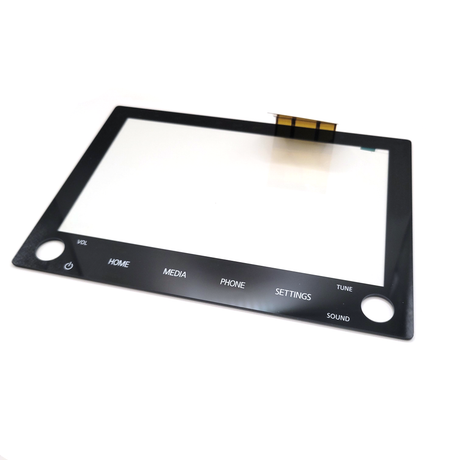
- The Digitizer (The Touch Layer): This is a thin, transparent panel—usually made of glass or high-grade plastic—that sits on top of the LCD. It contains a grid of sensors that detect the electrical charge from your fingertip. This is the part that fails in 90% of "ghost touch" cases.
Because dealerships do not employ technicians trained in micro-electronics, they are not allowed to "open" the display assembly. Their manufacturer-mandated repair procedure is to swap the entire multi-component module. It’s the equivalent of replacing an entire refrigerator just because the handle broke.
Why Touchscreens Fail:
You might wonder why a screen that worked perfectly for three years suddenly starts acting up. It usually comes down to three environmental factors that cars face but smartphones don't:
1. Thermal Cycling
A car interior is one of the most hostile environments for electronics. On a hot summer day, your dashboard can reach temperatures exceeding 180°F. At night, that same dashboard might drop to sub-zero temperatures. This constant expansion and contraction causes the "optical bonding" (the glue between the layers) to fail, creating phantom pressure points that the computer interprets as a finger touch.
2. UV Degradation
Unlike your laptop, your car screen is subjected to hours of direct sunlight. Over time, UV rays break down the chemical composition of the digitizer's sensor grid. This leads to "dead zones" where the screen no longer responds, or "jitters" where the cursor jumps around uncontrollably.
3. Mechanical Stress and Vibration
Every pothole, speed bump, and engine vibration puts physical stress on the thin glass layers of the digitizer. Over years of driving, microscopic fractures can develop in the conductive coating of the glass, leading to erratic signal behavior.
The Solution: Component-Level Repair
The good news is that the "Digitizer" is a replaceable part. By separating the failed touch layer from the healthy LCD panel and installing a new, high-quality digitizer, you restore the system to factory-new performance without the "factory-new" price tag.
Is DIY an option? For many vehicle platforms—such as the Cadillac CUE system, Ford SYNC, or GMC IntelliLink—the repair is surprisingly accessible. It generally involves removing a few trim pieces, unscrewing the display module, and swapping the glass. There are thousands of video tutorials available online that guide owners through this process, transforming a $2,000 dealership nightmare into a Saturday afternoon project.
The Cuescreens Difference: Engineering a Permanent Fix
While the goal of this article is to show you that repair is possible, where you get your parts matters. Many cheap replacement screens found on generic marketplaces use the same flawed adhesives that caused the original factory unit to fail.
At Cuescreens, we were born out of this exact frustration. Our founder experienced a Cadillac screen failure just weeks after purchase and refused to accept the $1,800 dealership "solution." We spent years researching, testing, and engineering replacement digitizers that actually outperform the originals.
- Upgraded Adhesives: We use industrial-grade bonding agents designed specifically to handle the 180°F+ temperatures of a sun-soaked car cabin.
- Premium Clarity: Our screens are designed to match or exceed the original visual specs, ensuring your backup camera and maps stay crystal clear.
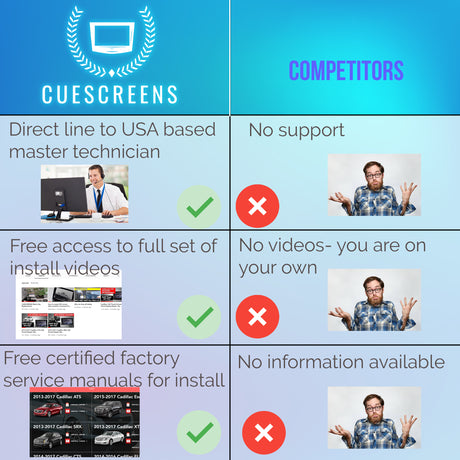
- Hassle-Free Support: We don't just ship you a box; we provide the expert support and documentation needed to make sure your installation is a success.
Don't Replace the Brain—Just Fix the Touch
If your car screen is acting possessed, remember: you have options. Repairing the digitizer is the most environmentally friendly and cost-effective way to get your car back to normal. Whether you're a seasoned DIYer or looking for a part to take to your local independent mechanic, we're here to help.
Find Your Replacement Screen HereAbout the Author
Daniel Gigante has over 18 years of experience in the automotive industry, with a focus on vehicle technology, infotainment systems, and real-world reliability. He writes about automotive design, touchscreen usability, and how modern technology impacts everyday driving.
![[Premium] Upgraded Gel-Free Cadillac CUE Replacement Touch Screen Display-Cuescreens](http://www.cuescreens.com/cdn/shop/files/7c1892_b5fcaf040dfe42abb289e47b1fa91ab9_mv2.png?v=1738265347&width=460)


![[Premium] Upgraded Gel-Free Cadillac CUE Replacement Touch Screen Display-Cuescreens. Supports Proximity Sensors.](http://www.cuescreens.com/cdn/shop/files/7c1892_7faa9297eab444d5a99838357b9c178c_mv2.png?v=1764720901&width=460)