Short answer: Yes — most Cadillac CUE owners replace their own screen. It's a common DIY repair that doesn't require dealer tools or programming, and it's the reason CUE replacement screens are sold direct to consumers, trim tool and pliers included. That said, it's not a beginner phone-screen swap: a few delicate connectors inside the module can turn a $139 repair into a $900 one if they're mishandled. Whether DIY or a professional installer is the right call comes down to your comfort level with small electronics work, not your mechanical skill in general.
Is Replacing a Cadillac CUE Screen a DIY-Friendly Repair?
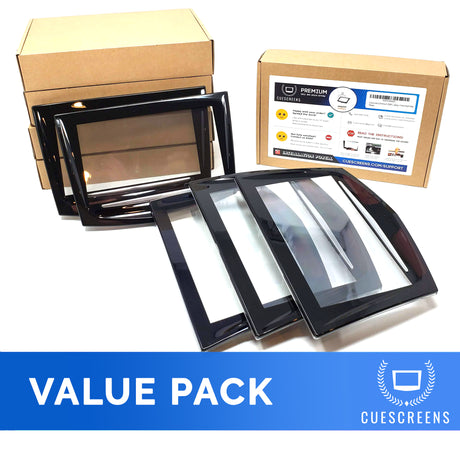
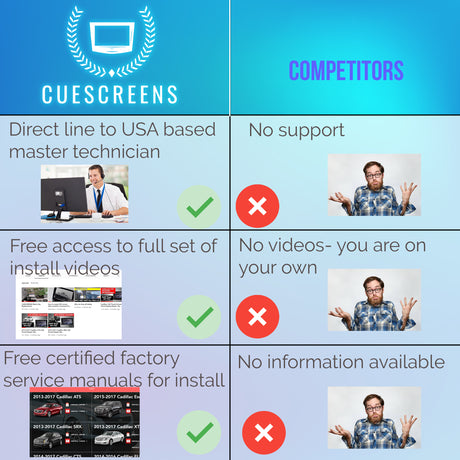
For most owners, yes. Replacing the CUE touchscreen is a module-out repair — you remove the CUE unit from the dash, swap the screen, and reinstall it — and it doesn't require CUE programming or dealer software. Cuescreens sells its replacement screen specifically for self-installation, with the trim removal tool and micro ESD pliers included in the box, and backs it with full installation guides and video tutorials for the specific Cadillac model you're working on.
What makes it different from, say, changing your own brake pads is scale: the components inside a CUE module are small, and a couple of specific steps determine whether the repair goes smoothly or turns into a second purchase.
What Actually Determines Difficulty: The Module, Not the Car
The difficulty of a CUE screen swap isn't about which Cadillac you drive — it's about how carefully you handle three things inside the module once it's out of the dash:
- The screen ribbon cable. This connector is delicate, and improper seating or a tear is the single most common cause of a screen that won't respond after replacement.
- The black locking clip that secures the ribbon cable. It's a small hinged piece, and if it snaps and falls inside the unit, the repair now requires a full module replacement.
- The alignment pins and screws. The module's screw holes vary slightly by supplier, and forcing a misaligned screen can crack it during reassembly.
- The white flex cable(s) inside the unit, which should never be touched or removed during a screen-only replacement.
None of this requires special skill — it requires slowing down and following the guide. That's exactly what Cuescreens' installation resources are built around.
DIY vs. Professional Installer: How to Decide
| DIY | Professional Installer | |
|---|---|---|
| Cost | Cost of the screen only | Screen cost + labor |
| Time | Typically an afternoon | Usually same-day at a shop |
| Tools needed | Trim tool and micro ESD pliers (included with the screen) — no metal tools near the trim or module | Installer supplies their own tools |
| Best for | Owners comfortable working carefully with small electronics and following a step-by-step guide | Owners who'd rather not risk the ribbon cable, clip, or alignment steps themselves |
| Risk if a step is missed | Ribbon cable damage, cracked screen, or clip failure are not covered under warranty | Installer assumes that risk |
If you're unsure which side of that table you fall on, Cuescreens also offers a mail-in repair service as a middle option — you send in your module, they handle the screen swap, and you avoid the connector and alignment steps entirely.
Where to Find the Actual Installation Steps
We're intentionally not walking through the install step-by-step in this post — the definitive, model-specific instructions live on our installation and video pages, and they're kept current as module variations are identified:
- Installation Instructions — the full written guide, including the ribbon cable, black clip, and alignment pin warnings above, plus what to do before you reassemble the unit.
- Video Tutorials — model-specific module removal and screen swap videos (CTS, ATS, SRX, XTS, Escalade, ELR, and more), plus troubleshooting videos for black screen and no-response issues.
If your specific Cadillac model isn't covered clearly in either resource, contact Cuescreens support before you start — not after the module is already apart.
Does the Screen Brand Affect How Hard the Install Is?
Yes, indirectly. According to Cuescreens' installation guide, roughly half of cheap replica screens (commonly sold for $20–$55) arrive dead on arrival, which means you can follow every step perfectly and still end up with a non-working screen — with no technical support to troubleshoot it. A genuine, properly manufactured replacement screen removes that variable, so the only thing left to get right is the install itself.
Frequently Asked Questions
- Can I replace my Cadillac CUE screen without removing the whole radio module?
- No — the screen replacement requires removing the CUE module from the dash first. The screen isn't accessible or replaceable in place.
- What's the most common mistake in a CUE screen DIY install?
- Damage to the screen ribbon cable — either not seating it correctly or tearing it during handling. This is the leading cause of a screen that shows no response after replacement, and it's not covered under warranty.
- Is a cracked CUE screen always a DIY fix?
- It can be, but a crack is sometimes a symptom of the alignment pins not lining up correctly during a previous reassembly, which cracks the screen when the screws are tightened. Getting the pins seated correctly the first time prevents this.
- What if I don't want to risk doing it myself?
- Cuescreens offers a mail-in repair service, and you can also find a local installer through their installer network.
- Is CUE screen programming required after replacement?
- No — a screen replacement is a physical component swap, not a software or module reprogramming procedure.
Cuescreens manufactures direct-fit replacement touchscreens for Cadillac CUE systems and publishes model-specific installation guides and video tutorials for self-installation.
![[Premium] Upgraded Gel-Free Cadillac CUE Replacement Touch Screen Display-Cuescreens](http://www.cuescreens.com/cdn/shop/files/7c1892_b5fcaf040dfe42abb289e47b1fa91ab9_mv2.png?v=1738265347&width=460)


![[Premium] Upgraded Gel-Free Cadillac CUE Replacement Touch Screen Display-Cuescreens. Supports Proximity Sensors.](http://www.cuescreens.com/cdn/shop/files/7c1892_7faa9297eab444d5a99838357b9c178c_mv2.png?v=1764720901&width=460)