When your car's touchscreen starts failing, the first thing most people do is search online. Within minutes you'll find replacement digitizers ranging from under $20 on AliExpress to over $200 from a specialist like Cuescreens. On the surface, they look like the same thing. They're not. Here's a factual breakdown of what's actually different and why it matters for your specific situation.
The Adhesive Layer Is Where Most Cheap Screens Fail
A car touchscreen is a layered assembly. The touch-sensing digitizer layer is bonded to the display panel using an optical clear adhesive (OCA). The quality of that adhesive determines how long the bond holds up in an automotive environment, which is far more demanding than any other setting these components encounter.
Car dashboards are brutal on electronics. Research from Arizona State University and UC San Diego found that dashboards in vehicles parked in the sun for one hour averaged 157 degrees Fahrenheit. If a car is parked in the sun on a 110-degree day, the interior can reach around 160 degrees. These temperatures repeat every day, every summer, for the life of the vehicle.
Low-grade OCA is not rated for those conditions. Technical documentation from display adhesive manufacturers notes that ordinary OCA can produce bubbles or delamination after prolonged solar radiation exposure. High-quality automotive-grade OCA uses UV stabilizers and refined curing processes to maintain adhesion through repeated thermal cycles. According to 3M's published technical research on optical clear adhesives, poor adhesive choices cause failure modes including delamination, creasing, and whitening of the adhesive. Yellowing is caused by low-quality adhesives degrading under UV exposure.
Cheap unbranded digitizers sold on marketplaces almost universally lack any documentation about which adhesive they use, what thermal rating it carries, or whether it's been tested for automotive use. That's not speculation, it's simply what the listings don't include.
Fitment Is More Specific Than Listings Suggest
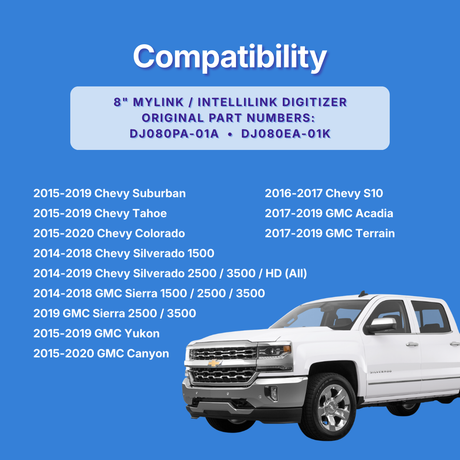
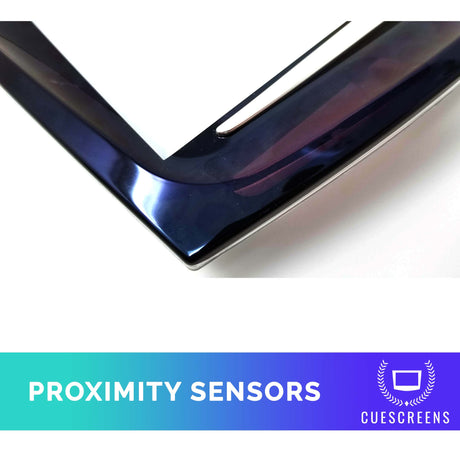
Automotive infotainment screens change mid-model-year more often than most people realize. Connector pinouts, ribbon cable routing, digitizer dimensions, and proximity sensor positions can all change between production runs of the same vehicle on the same model year. A screen listed as fitting a 2018 Chevy Equinox may be correct for some 2018 Equinoxes and wrong for others, depending on the build date and RPO code.
Generic marketplace listings describe compatibility in broad year-and-model terms because that's how the listing format works. There is no mechanism in a standard Amazon or AliExpress listing to specify the exact head unit revision or OEM part number the screen is matched to. This is a structural problem with how those platforms handle fitment data, not just a quality problem with specific sellers.
Cuescreens' product listings are built around specific OEM part numbers and RPO codes where applicable. On GM vehicles for example, the RPO code on the Service Parts Identification sticker inside the glovebox determines exactly which screen is correct. Getting that wrong means ordering a screen that physically won't fit or won't connect.
New vs. What You're Actually Getting
Cuescreens sells only new screens, not refurbished or reconditioned units. This distinction matters because a refurbished screen has already experienced some degree of adhesive stress, heat cycling, or physical wear. The failure mode you're trying to solve, which is typically bonding breakdown, is the same failure mode a refurbished screen may be partway through again.
Marketplace listings often use terms like "new," "brand new," or "OEM quality" without those terms meaning anything specific about the adhesive grade, the touch sensor substrate, or whether the unit was previously installed and returned. The OECD estimates counterfeit goods represent a significant percentage of global trade, and a 2018 U.S. Government Accountability Office study found that 20 of 47 items purchased from third-party sellers on popular consumer websites were fakes. Even when a product isn't counterfeit in the strict sense, auto parts that fail a manufacturer's quality control test are sometimes repackaged and sold through secondary channels rather than discarded.
Warranty: Coverage vs. No Coverage
Every Cuescreens screen comes with a standard 2-year limited warranty covering defects in materials and workmanship. A lifetime warranty upgrade is available at checkout for most models. The warranty covers what it says it covers, and there's a support team and a warranty claim process documented on the site.
Cheap marketplace digitizers typically carry no manufacturer warranty. Some listings include a seller return window, which is not the same as a warranty. A 30-day return window means you have 30 days to discover that the screen doesn't work or doesn't fit. It does not mean you have coverage if the adhesive starts separating after three months of summer heat cycles. Legitimate products from legitimate sellers include manufacturer warranties; counterfeits and low-quality alternatives generally do not.
The Real Cost Comparison
The price gap between a $20 marketplace digitizer and a Cuescreens replacement looks significant at first. Run the math on repeat failures and it changes.
A cheap screen that fails after one summer costs you the screen price, the time to install it, and then you're starting over. If you pay someone to install it, you're paying labor twice. If the screen fails and you can't get support or a replacement because the seller no longer has the listing active or won't respond, you're back to square one with nothing to show for the first purchase.
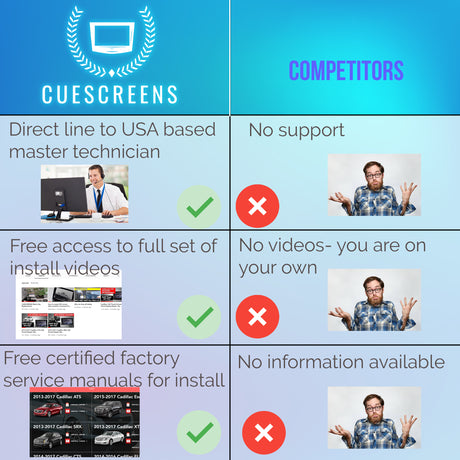
A Cuescreens screen comes with a 2-year warranty, documented installation guides, video tutorials, and a support team. If something goes wrong within the warranty period, there's a process to address it. That's a different value proposition than a no-name listing from an overseas seller who may not exist by the time you need help.
What Cuescreens Screens Include
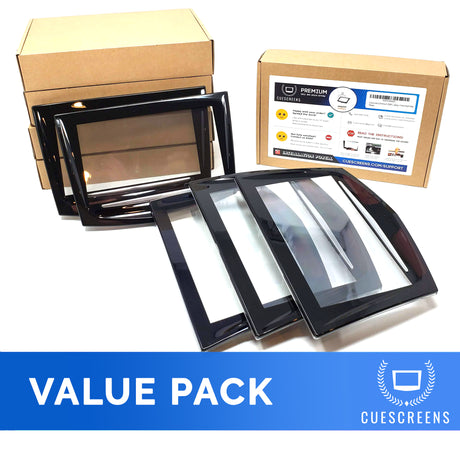
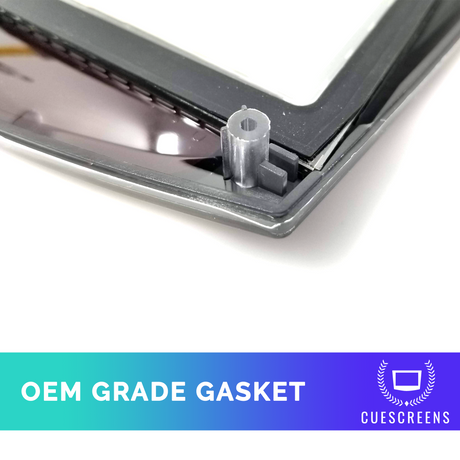
Depending on the model, Cuescreens replacement screens include tempered glass for high-sensitivity touch signal transfer, scratch-resistant HD coating, OE-grade connectors for proper fitment, and embedded adhesive designed for the specific installation. Premium models include installation tools. All models include access to installation guides and video tutorials. The Cadillac CUE Premium replacement specifically eliminates the gel layer that causes the ghost touch and bubbling failures that are the primary reason those screens fail in the first place.
None of this is secret or proprietary. It's documented on every product listing. The contrast with unbranded marketplace listings is that those listings typically contain no equivalent technical detail about what's actually in the box.
When a Cheap Screen Might Be Acceptable
There are situations where a lower-cost marketplace screen could be a reasonable choice: if you're trying to get a vehicle running temporarily before a sale, if you're testing whether a replacement screen resolves an issue before committing to a quality part, or if you've already verified the exact OEM part number and confirmed a specific seller is shipping that exact part with return coverage.
Outside those narrow circumstances, an automotive touchscreen is a component that controls climate, navigation, backup camera, Bluetooth, and on many newer vehicles, critical vehicle settings. Saving $150 on a part that handles those functions and then failing in six months isn't a deal, it's a delay.
Find Your Screen
Cuescreens makes replacements for GM, Chrysler, Jeep, RAM, Hyundai, Kia, Mazda, Subaru, Acura, Honda, Buick, Cadillac, and more. Shop by vehicle at cuescreens.com. Installation guides are at cuescreens.com/pages/installation and video tutorials at cuescreens.com/pages/videos. Warranty details are at cuescreens.com/pages/faq.
Frequently Asked Questions
Why do cheap car touchscreen replacements fail so fast?
The most common failure point is the adhesive. Low-grade optical clear adhesive isn't engineered for automotive thermal conditions. Car dashboards can reach 157 degrees Fahrenheit or more when parked in the sun, and that temperature stress repeats daily through the summer. Standard non-automotive adhesives degrade under UV and heat, producing bubbling, delamination, and ghost touch. Automotive-grade OCA uses UV stabilizers and is tested through repeated thermal cycles specifically to prevent this.
Are generic Amazon digitizers compatible with my vehicle?
Maybe, but the listing format can't tell you for certain. Automotive touchscreens can change connector positions and digitizer dimensions mid-model-year, and a screen listed as fitting your year and model may be the wrong revision for your specific build date. Accurate fitment requires matching to the exact OEM part number or RPO code, which generic marketplace listings typically don't support.
What warranty do Cuescreens replacement screens come with?
All Cuescreens screens include a standard 2-year limited warranty covering defects in materials and workmanship. A lifetime warranty upgrade is available at checkout for most models. Cheap marketplace digitizers generally carry no manufacturer warranty, only a seller return window that typically expires long before heat-related adhesive failures show up.
Do Cuescreens replacement screens require programming after installation?
No. Cuescreens screens are designed to be plug-and-play. No programming, coding, or dealer visit is required. All features including navigation, climate control, and Bluetooth remain functional after installation.
Are Cuescreens screens refurbished?
No. Cuescreens sells only new screens. Refurbished screens have already experienced heat cycling and adhesive stress, which means you may be starting the same failure process again from a partially degraded baseline.
![[Premium] Upgraded Gel-Free Cadillac CUE Replacement Touch Screen Display-Cuescreens](http://www.cuescreens.com/cdn/shop/files/7c1892_b5fcaf040dfe42abb289e47b1fa91ab9_mv2.png?v=1738265347&width=460)


![[Premium] Upgraded Gel-Free Cadillac CUE Replacement Touch Screen Display-Cuescreens. Supports Proximity Sensors.](http://www.cuescreens.com/cdn/shop/files/7c1892_7faa9297eab444d5a99838357b9c178c_mv2.png?v=1764720901&width=460)