If you’ve ever seen a car infotainment screen with bubbling edges, spiderweb cracks, or random “ghost touches,” you’ve witnessed delamination in action. It’s one of the most common failure modes in modern vehicles—and one of the most frustrating.
But newer, gel-free digitizer technology is changing that.
In this guide, we’ll break down exactly why traditional screens fail, how gel-free designs solve the problem, and why they’re quickly becoming the preferred long-term solution.
What Is Screen Delamination?
Delamination occurs when the layers inside your infotainment screen begin to separate. Most factory screens are made up of three primary layers:
- Protective glass (outer layer)
- Touch-sensitive digitizer
- LCD display underneath
These layers are bonded together using an adhesive—often a soft, gel-like material known as Optical Clear Adhesive (OCA).
Over time, this adhesive begins to break down due to heat, UV exposure, and moisture. When that happens, the layers separate, creating visible bubbles, cracks, and eventually total touch failure.
Why Traditional Gel-Based Screens Fail
OEM infotainment systems were designed for clarity and cost efficiency, not long-term durability under extreme conditions. The gel-based adhesive used in many factory screens is particularly vulnerable.
Here’s what happens inside your dashboard:
- Heat buildup: Interior temperatures can exceed 130–150°F
- UV exposure: Sunlight degrades adhesive bonds over time
- Thermal cycling: Repeated expansion and contraction weakens the structure
The result is predictable: the adhesive softens, shifts, and eventually fails. This is why many screens start cracking at the edges before spreading inward.
What Is a Gel-Free Digitizer?
A gel-free digitizer eliminates the traditional soft adhesive layer entirely. Instead of relying on a heat-sensitive bonding gel, these screens use advanced materials and construction methods designed for stability.
This typically includes:
- Solid-state bonding techniques
- Heat-resistant adhesive alternatives
- Improved structural rigidity between layers
By removing the weakest link—the gel—manufacturers can dramatically increase durability.
How Gel-Free Screens Prevent Delamination
The biggest advantage of gel-free technology is simple: there’s no soft adhesive to break down.
Here’s how that translates into real-world performance:
- No bubbling or separation under high heat conditions
- Consistent touch response without internal shifting
- Resistance to UV degradation
- Greater lifespan compared to OEM designs
Instead of slowly deteriorating over time, gel-free screens maintain their structural integrity even in harsh environments.
Why Heat Is the Real Enemy
Most people think screen failure is random—but it’s not. Heat is the primary driver.
When your car sits in the sun, the dashboard acts like a heat sink. Even with window tint, temperatures can easily exceed safe thresholds for traditional adhesives.
Gel-based systems soften under these conditions. Gel-free systems don’t.
This difference is what separates a screen that fails in 2–4 years from one that lasts significantly longer.
Additional Benefits of Gel-Free Digitizers
Beyond preventing delamination, gel-free screens offer several performance advantages:
- Improved clarity without haze or yellowing
- Faster touch response with no internal interference
- No “ghost touch” caused by adhesive breakdown
- Better long-term reliability in all climates
These aren’t just durability upgrades—they directly improve the driving experience.
Where Gel-Free Technology Makes the Biggest Difference
Vehicles known for high failure rates benefit the most from gel-free upgrades. This includes systems where delamination is almost inevitable with OEM parts.
Common examples include:
- Cadillac CUE systems (2013–2020)
- Subaru Starlink screens
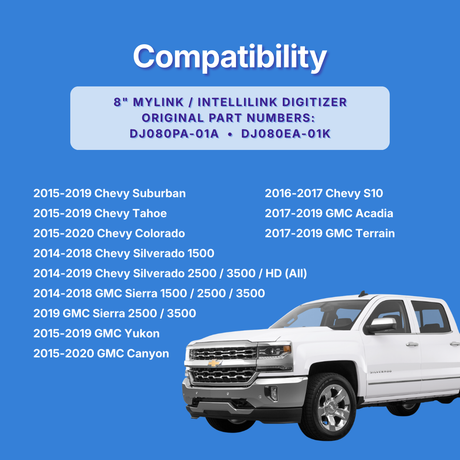
- GM MyLink and IntelliLink systems
- Certain Kia and Hyundai infotainment units
In these cases, replacing a failed screen with another OEM unit often leads to the same problem again. Gel-free alternatives break that cycle.
TL;DR
Delamination isn’t just a defect—it’s a design limitation of traditional gel-based screens.
Gel-free digitizers solve that problem at the source by removing the component most likely to fail. The result is a screen that holds up against heat, UV exposure, and time.
If you’re looking for a long-term fix—not just a temporary replacement—gel-free technology is the clear upgrade.
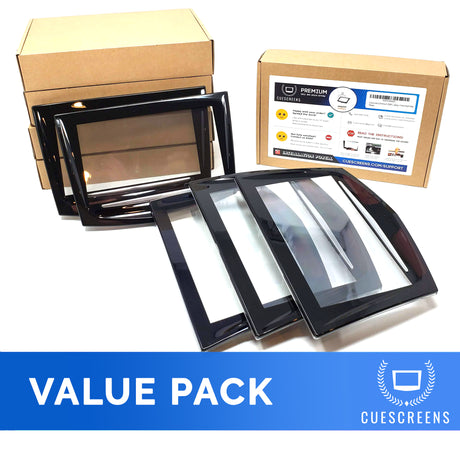
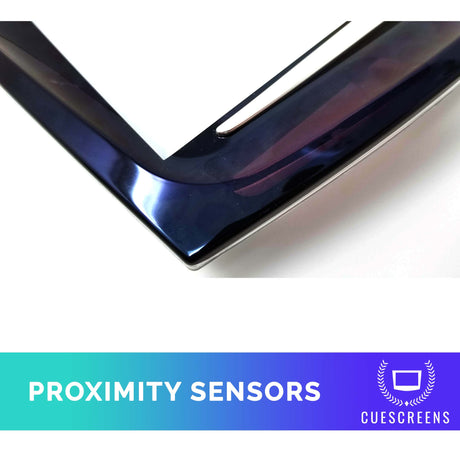
At Cuescreens, our replacement digitizers are engineered without gel-based adhesives, specifically to eliminate the root cause of OEM screen failures. That means no bubbling, no ghost touch, and no repeat repairs. Explore our gel-free screens here.

About the Author
Daniel Gigante has over 18 years of experience in the automotive industry, with a focus on vehicle technology, infotainment systems, and real-world reliability. He writes about automotive design, touchscreen usability, and how modern technology impacts everyday driving.
![[Premium] Upgraded Gel-Free Cadillac CUE Replacement Touch Screen Display-Cuescreens](http://www.cuescreens.com/cdn/shop/files/7c1892_b5fcaf040dfe42abb289e47b1fa91ab9_mv2.png?v=1738265347&width=460)


![[Premium] Upgraded Gel-Free Cadillac CUE Replacement Touch Screen Display-Cuescreens. Supports Proximity Sensors.](http://www.cuescreens.com/cdn/shop/files/7c1892_7faa9297eab444d5a99838357b9c178c_mv2.png?v=1764720901&width=460)