If you're planning to replace your car’s touchscreen or infotainment display, one of the most common questions is: Do you need to disconnect the battery first?
The short answer is yes—most of the time, you should. But there are a few nuances depending on your vehicle and the type of repair you're doing.
This guide breaks down when it’s necessary, why it matters, and how to do it safely.
Why Disconnecting the Battery Matters
Your vehicle’s infotainment system is connected to multiple electrical components, including the head unit, display module, and sometimes climate or vehicle control systems.
Leaving the battery connected while working on these components can lead to:
- Short circuits when unplugging connectors
- Blown fuses or damaged electronics
- Error codes triggered in the system
- Unexpected power surges during reconnection
Even though you're only working on a screen, you're still interacting with live electrical systems.
When You Should Definitely Disconnect the Battery
In most DIY screen repairs, disconnecting the battery is the safest approach—especially if:
- You are removing the entire head unit
- You are disconnecting multiple wiring harnesses
- Your vehicle has integrated controls (climate, safety systems, etc.)
- You are unsure whether the system has constant power
Modern vehicles often supply power to certain modules even when the car is off, which increases risk during repair.
When It Might Not Be Required
Some simpler repairs—like replacing just the front digitizer on certain models—can technically be done without disconnecting the battery.
However, this comes with risk. Even if others have done it successfully, skipping this step increases the chance of accidental damage.
Best practice: If you're asking the question, you should disconnect it.
How to Safely Disconnect Your Battery
Disconnecting your battery is quick and straightforward:
- Turn off the vehicle completely and remove the key or fob
- Open the hood and locate the battery
- Use a wrench to loosen the negative (-) terminal first
- Carefully remove the cable and position it away from the terminal
You don’t usually need to remove the positive terminal for this type of repair.
How Long Should You Wait After Disconnecting?
After disconnecting the battery, it’s a good idea to wait 5–10 minutes before starting your repair.
This allows any residual electrical charge in the system to dissipate, reducing the risk of shorts or system errors.
Will Disconnecting the Battery Reset Anything?
Yes, in some cases. Disconnecting your battery may:
- Reset your clock and radio presets
- Clear temporary system settings
- Trigger minor recalibration processes
Most modern vehicles will automatically relearn these settings quickly after reconnection.
In the majority of screen replacements, no VIN programming or major resets are required.
What About Airbags and Safety Systems?
This is another reason disconnecting the battery is important.
Some dashboard panels are located near airbag components or sensors. Working in these areas with live power increases the risk of triggering warning lights—or worse, accidental deployment (rare, but not worth the risk).
Reconnecting the Battery After Repair
Once your repair is complete:
- Reconnect the negative (-) terminal
- Tighten it securely
- Start the vehicle and test the screen
If you see any warning lights, they typically clear after a short drive cycle.
Common DIY Mistakes to Avoid
- Skipping battery disconnection to “save time”
- Letting the terminal touch metal while disconnected
- Forcing connectors instead of gently releasing clips
- Turning the car on while components are unplugged
Most issues during DIY repairs come from rushing—not the repair itself.
The Bottom Line
Do you need to disconnect your battery before a screen repair?
Yes—if you want to do it safely and avoid unnecessary risk.
It only takes a few minutes and can prevent costly damage to your vehicle’s electronics.
Whether you're replacing a failed digitizer or upgrading to a more durable solution, taking proper safety precautions ensures your repair goes smoothly from start to finish.
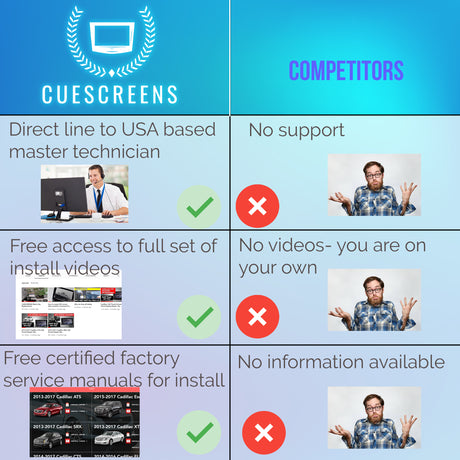
At Cuescreens, we design our replacement touchscreens to be as DIY-friendly as possible—no complex programming, no unnecessary steps, just a straightforward install built for real-world conditions. If you need additional help, consider checking out our video tutorials and installation guides.

About the Author
Daniel Gigante has over 18 years of experience in the automotive industry, with a focus on vehicle technology, infotainment systems, and real-world reliability. He writes about automotive design, touchscreen usability, and how modern technology impacts everyday driving.
![[Premium] Upgraded Gel-Free Cadillac CUE Replacement Touch Screen Display-Cuescreens](http://www.cuescreens.com/cdn/shop/files/7c1892_b5fcaf040dfe42abb289e47b1fa91ab9_mv2.png?v=1738265347&width=460)


![[Premium] Upgraded Gel-Free Cadillac CUE Replacement Touch Screen Display-Cuescreens. Supports Proximity Sensors.](http://www.cuescreens.com/cdn/shop/files/7c1892_7faa9297eab444d5a99838357b9c178c_mv2.png?v=1764720901&width=460)