Finding a used car that ticks every box—low mileage, clean history, and the right price—is an exhilarating feeling. But then you notice it: the infotainment screen is peeling, flickering, or completely unresponsive to touch. To most buyers, this is a "red flag" that sends them running back to the dealership lot.
However, for the savvy buyer, a broken screen isn't a dealbreaker; it’s a negotiation powerhouse. At Cuescreens, we’ve helped thousands of owners turn a "broken" car into a high-tech ride for a fraction of the cost. Here is everything you need to consider before buying a vehicle with a known screen issue.
1. Understanding the "Ghost in the Machine"
Modern cars rely on Human Machine Interfaces (HMI). When these fail, the symptoms can range from mildly annoying to downright dangerous. Before buying, you must identify which type of failure you are looking at:
The Infamous "Ghost Touching"
Common in Cadillac CUE systems and Mazda Connect units, this is where the car acts as if an invisible finger is pressing buttons. It can change your radio station, call your boss at 11:00 PM, or cancel your GPS navigation. This is almost always a failure of the digitizer (the touch-sensitive glass layer), not the computer itself.
Delamination and Bubbling
Seen frequently in Jeep, Dodge, and RAM Uconnect 8.4-inch screens, delamination looks like liquid is leaking inside the screen or like a cheap screen protector is peeling off. This is caused by the failure of the optical adhesive between the LCD and the glass. It looks terrible and eventually kills touch functionality.
The Black Screen of Death
If the screen is totally black, it could be a blown fuse, a dead backlight, or a failed internal hard drive. While more serious, many of these "dead" units are still salvageable without replacing the entire dashboard.
2. The Dealership "Tax": Why Sellers are Scared
If you take a car with a failed screen to a local dealer, they will almost always give you a single option: Total Unit Replacement.
| Service Provider | Estimated Cost | The Solution |
|---|---|---|
| Mainstream Dealership | $2,000 – $4,500 | Replace the entire computer and screen assembly. |
| Independent Shop | $1,200 – $2,000 | Install a used (and likely soon-to-fail) unit from a salvage yard. |
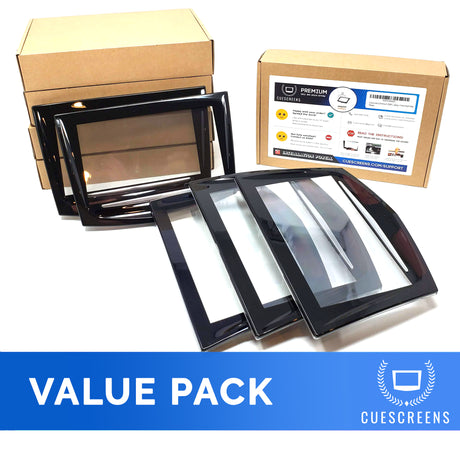
| Cuescreens DIY Kit | $100 – $300 | Replace only the failed glass/digitizer with upgraded parts. |
Because the average seller sees a $3,000 repair estimate, they are often willing to drop the price of the car by that much—or more—just to get rid of it. This is where you, the informed buyer, win.
3. How to Inspect a Faulty Screen Before Buying
If you’re inspecting a car with a screen issue, perform these three tests to ensure the problem is isolated to the display and not a deeper electrical nightmare:
- The Hard Reset Test: Hold the power/volume knobs (or the specific combination for that brand) to reboot the system. If the problem persists exactly as it was, it’s a hardware failure in the screen.
- The Control Check: Can you still control the volume or climate via steering wheel buttons or physical knobs? If the physical buttons work but the screen doesn't, the "brains" of the car are fine; only the "interface" (the screen) is broken.
- The Heat Test: Many delamination issues get worse when the car sits in the sun. If the touch responsiveness changes based on temperature, you are definitely dealing with a digitizer/adhesive failure.
4. Is it a DIY Project?
Many people assume that working on a car’s dashboard requires an engineering degree. In reality, replacing a screen digitizer is often easier than changing your own oil.
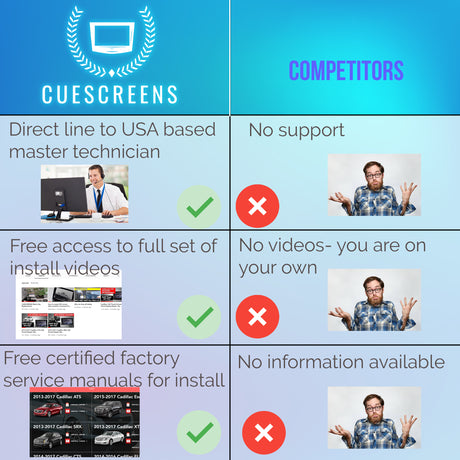
At Cuescreens, our kits are designed for the "Saturday Morning Mechanic." We provide:
- Premium Replacement Glass: Often better than the OEM part that failed.
- Specialized Tools: Pry tools and screwdrivers specifically for automotive trim.
- Step-by-Step Tutorials: We walk you through every screw and ribbon cable.
5. The Verdict: When to Walk Away
Should you buy it? Yes, provided the engine and transmission are healthy. A screen is a peripheral; it’s a component that can be swapped. Do not let a $200 repair part stand in the way of a vehicle that is mechanically sound and thousands of dollars under market value.
The only time to walk away is if the screen issue is accompanied by other electrical gremlins, such as flickering headlights, power seats that don't move, or burning plastic smells. These indicate a wiring harness or Body Control Module (BCM) issue, which is a much deeper rabbit hole.
Final Thoughts
In the age of technology, a "broken" car is often just a car with a broken piece of glass. If you find a Cadillac, Jeep, or Lexus with a glitchy screen, don't see a headache—see an opportunity. Use the screen failure to negotiate a better price, then head over to Cuescreens.com to find the permanent fix.
Ready to restore your display?
Check out our full catalog of replacement screens and take back control of your drive.
![[Premium] Upgraded Gel-Free Cadillac CUE Replacement Touch Screen Display-Cuescreens](http://www.cuescreens.com/cdn/shop/files/7c1892_b5fcaf040dfe42abb289e47b1fa91ab9_mv2.png?v=1738265347&width=460)


![[Premium] Upgraded Gel-Free Cadillac CUE Replacement Touch Screen Display-Cuescreens. Supports Proximity Sensors.](http://www.cuescreens.com/cdn/shop/files/7c1892_7faa9297eab444d5a99838357b9c178c_mv2.png?v=1764720901&width=460)