When a car's touchscreen starts acting up, the advice from dealerships is almost always the same: replace the whole head unit. It's a straightforward upsell. The problem is that in the vast majority of failures, the head unit electronics are working perfectly. What has actually failed is the touchscreen layer sitting in front of them.
Replacing the entire head unit to fix a failed touchscreen is a bit like replacing your refrigerator because the door handle broke. The part that failed and the part you're paying to replace are not the same thing.
What actually fails in most infotainment screens
Most touchscreen failures come down to one of three physical problems: a failed digitizer, glass delamination, or a cracked screen. The digitizer is the invisible layer that detects touch input. When it fails, you get ghost touches, dead zones, or no response at all. Delamination happens when the bonding layer between the digitizer and the LCD breaks down, usually from heat, causing bubbling, distorted visuals, or erratic inputs.
In both cases, the LCD and the head unit electronics are unaffected. The system can still process inputs, run software, connect to your phone, and control your climate. The only problem is the physical touch layer. Swapping the entire module when that is the case means paying full price to replace components that have nothing wrong with them.
The real cost difference
A dealer replacement for a factory infotainment module typically runs between $1,700 and $3,500 or more. That figure covers the replacement module, labor, and in many cases, mandatory programming. A direct-fit touchscreen replacement for the same vehicle typically runs between $170 and $550 for the part.
That is not a small gap. On a vehicle you plan to keep, or one that is already paid off, spending $2,000 to $3,000 more than necessary is a real hit.
Head unit replacements often require dealer programming
This is the part most people do not know going in. On many modern vehicles, replacing the head unit is not plug-and-play. The module has to be programmed to the vehicle before it will function.
On GM vehicles, the infotainment system is tied to the vehicle's VIN as an anti-theft measure. A replacement unit arrives in a locked state and requires programming through GM's Service Programming System before it will work. That process can only be done by a GM dealer or a specialized shop with access to the right tools and subscriptions. On Volkswagen vehicles, a similar system called Component Protection links the module to the original VIN. Installing a used or replacement unit without dealer coding using ODIS will result in the system powering on but audio and other key functions being disabled. The coding service alone can cost $150 to $400 on top of the unit and installation.
When you replace only the touchscreen assembly, none of that applies. You are not touching the electronics. The head unit stays put. No programming is needed and no dealer visit is required after installation.
Swapping the head unit can cost you factory features
On modern vehicles, the factory infotainment module is woven into the rest of the car. Climate control menus, driver settings, backup camera configuration, and driver assistance features all run through it. Replacing it with an aftermarket unit, or even a mismatched OEM unit, can mean losing access to some or all of those integrations.
This is a known risk that owners often do not learn about until after the swap. Integration between a factory infotainment system and the vehicle's other modules is not something an aftermarket unit can replicate. If your car shipped with those features from the factory, the safest way to keep them is to keep the head unit that was designed for it.
There is also the problem of gel-based screens
On certain platforms, including the Cadillac CUE system and Subaru Starlink systems used in 2018 and 2019 Outback and Legacy models, screen delamination is a known defect caused by a gel bonding layer that breaks down in heat over time. When a dealer replaces the head unit on these vehicles, the replacement often uses the same gel-based design that failed in the first place. Owners have reported that replacement screens begin delaminating again after a few summers, leaving them back at square one after spending $1,500 to $3,000.
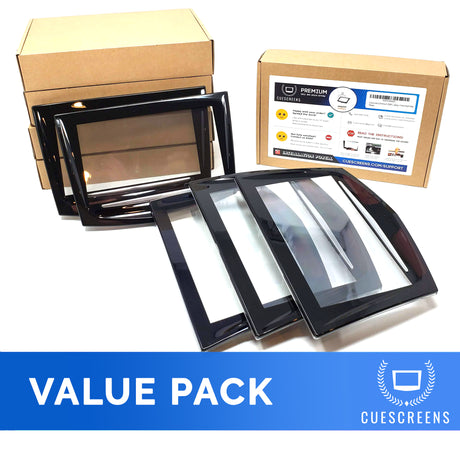
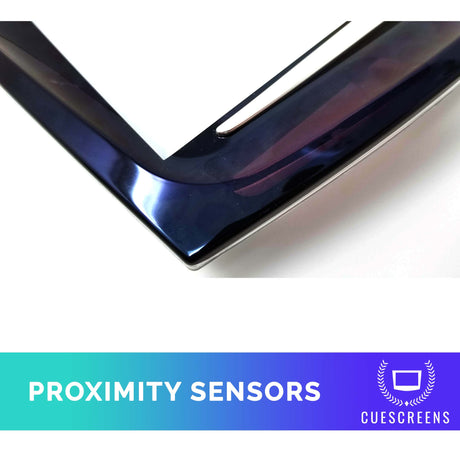
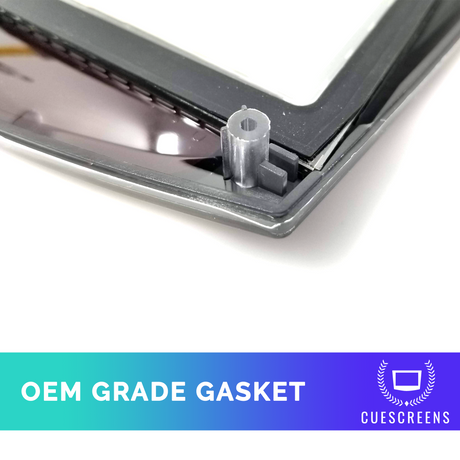
Cuescreens replacement assemblies are gel-free. The construction addresses the failure mode rather than repeating it.
When a screen replacement makes sense vs when it does not
A touchscreen-only replacement is the right call when the display still shows video, the system still responds to physical buttons if present, and the failure symptoms are ghost touch, dead zones, delamination, or a cracked digitizer layer. Those are all physical screen failures with the electronics still intact.
A full head unit replacement makes more sense when the system is completely unresponsive, has suffered electrical damage, or has a software issue that cannot be resolved through a dealer update. In those cases, the fault actually does lie with the module, not just the screen.
The distinction matters because dealers rarely make it for you. The default recommendation is always the more expensive option. Knowing which part has actually failed puts you in a position to make the right call.
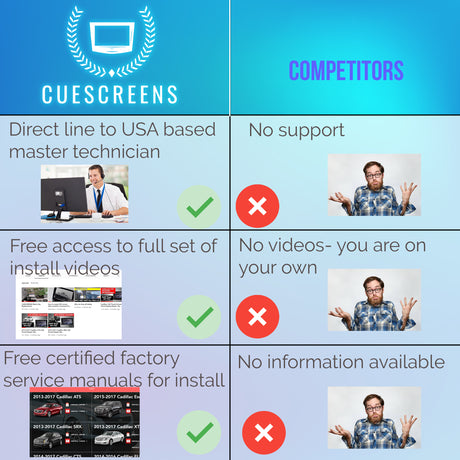
Cuescreens makes the right call easier
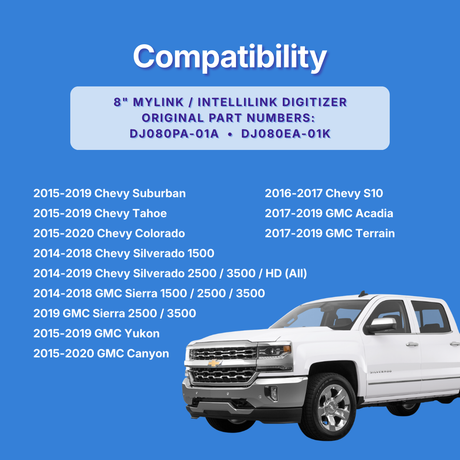
Cuescreens sells direct-fit, gel-free replacement touchscreen assemblies for the platforms where these failures are most common: GM MyLink and IntelliLink, Cadillac CUE, Jeep and RAM Uconnect, Ford Sync 3 and Sync 4, Volkswagen MIB2, Hyundai, Kia, Mazda, and Subaru Starlink. Every replacement is designed to install without programming, without dealer involvement, and without losing any of your vehicle's factory functionality.
If your screen is acting up, find your vehicle at cuescreens.com to see whether a direct-fit replacement is available.
Frequently asked questions
Do I need to replace my whole head unit if my touchscreen is not working?
In most cases, no. The majority of touchscreen failures are caused by a failed digitizer or glass layer, not the electronics inside the head unit. If your screen has ghost touch, dead zones, or delamination, replacing only the touchscreen assembly is usually the correct fix.
Does replacing a head unit require dealer programming?
Yes, on many modern vehicles. GM infotainment modules are tied to the vehicle's VIN and require programming through GM's Service Programming System before a replacement unit will function. Volkswagen uses a similar system called Component Protection, which must be removed by a dealer or qualified shop using specialized diagnostic tools. Replacing only the touchscreen assembly avoids this requirement entirely.
Will replacing the head unit cause me to lose factory features?
It can. On modern vehicles, the factory infotainment module is deeply integrated with climate controls, backup camera settings, driver assistance features, and vehicle settings menus. Installing an aftermarket head unit in place of a factory system can result in the loss of some or all of these features.
How much does it cost to replace a car touchscreen vs a full head unit?
A touchscreen-only replacement typically costs between $170 and $550 for the part, depending on the vehicle. A full head unit replacement at a dealership typically runs $1,700 to $3,500 or more, which includes the module itself, dealer labor, and any required programming.
What is the difference between the touchscreen and the head unit?
The head unit is the main electronic module that runs your infotainment system, including the processor, software, radio tuner, and all vehicle integrations. The touchscreen is the physical input layer sitting in front of the display. In most vehicle failures, the head unit electronics are still fully functional while only the touchscreen has failed.
![[Premium] Upgraded Gel-Free Cadillac CUE Replacement Touch Screen Display-Cuescreens](http://www.cuescreens.com/cdn/shop/files/7c1892_b5fcaf040dfe42abb289e47b1fa91ab9_mv2.png?v=1738265347&width=460)


![[Premium] Upgraded Gel-Free Cadillac CUE Replacement Touch Screen Display-Cuescreens. Supports Proximity Sensors.](http://www.cuescreens.com/cdn/shop/files/7c1892_7faa9297eab444d5a99838357b9c178c_mv2.png?v=1764720901&width=460)