You walk out to your Jeep Grand Cherokee, Cadillac ATS, or GMC Sierra on a bright morning, and there it is: a hairline fracture or a spiderweb pattern creeping across your infotainment screen. You haven't dropped your phone against it, and there’s no sign of a physical hit. So, how did it happen?
At Cuescreens, we’ve found that "spontaneous" cracking isn't bad luck—it’s usually a result of specific environmental and manufacturing factors. Here is why car screens crack without impact and how you can fix them for a fraction of the dealer’s price.
1. Thermal Stress and Expansion
Modern car interiors are essentially greenhouses. On a 90°F day, your dashboard temperatures can easily exceed 160°F. Most factory touchscreens are capacitive digitizers made of glass and plastic layers bonded together with Optical Clear Adhesive (OCA).
- Expansion Rates: The glass, the adhesive, and the plastic frame all expand and contract at different rates when heated.
- The Snap: If the screen is installed too tightly in the dash or if the adhesive has hardened over time, the physical tension eventually exceeds the glass's breaking point. This is a primary cause of Jeep Uconnect screen cracking in hotter climates.
2. Delamination and Adhesive Failure
Many 2018–2023 Jeep, RAM, and Chrysler models suffer from a process called delamination. This is where the gel-like adhesive between the LCD and the digitizer begins to separate or leak.
As this gel shifts or dries out, it creates "voids" or bubbles. These bubbles put uneven pressure on the glass from the inside out. Eventually, this internal pressure creates a stress fracture that looks like a crack but is actually an internal failure of the bonding agent.
3. Micro-Vibrations and Structural Fatigue
Vehicles are subject to constant "micro-vibrations" from the road. If a touchscreen was manufactured with a tiny, microscopic flaw at the edge of the glass (often invisible to the naked eye), thousands of miles of road vibration act like a hammer on a chisel. Over time, that tiny flaw grows into a full-blown crack.
How to Fix a Cracked Screen (Without the $2,000 Bill)
If you take your vehicle to a dealership for a cracked screen, they will almost always tell you that you need a full head unit replacement. These quotes typically range from $1,500 to $3,000 because they are replacing the computer, the radio, and the screen as one single part.
The Cuescreens Advantage: In 95% of these cases, the "brains" of your radio are perfectly fine. Only the outer glass is broken.
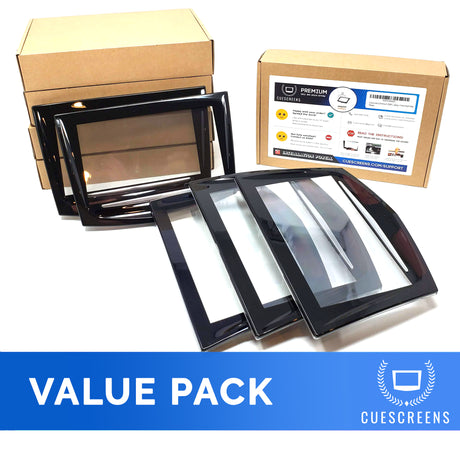
By replacing just the touchscreen with a Cuescreens kit, you can:
- Save Thousands: Our kits cost a fraction of a new head unit.
- DIY Friendly: Most installs take under an hour and require basic tools.
- Improved Durability: Our replacement screens are designed to withstand higher thermal loads than the factory originals, specifically to prevent future cracking and ghost touch.
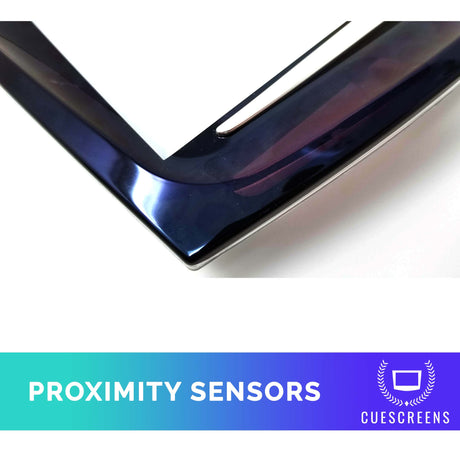
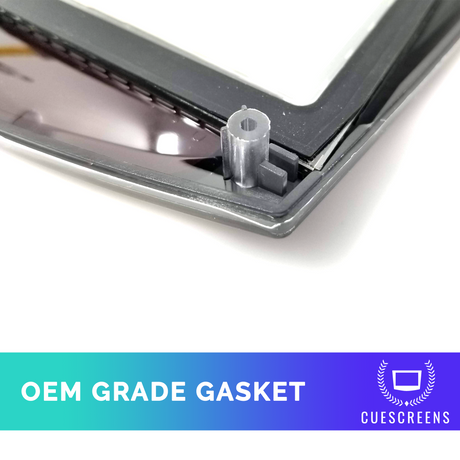
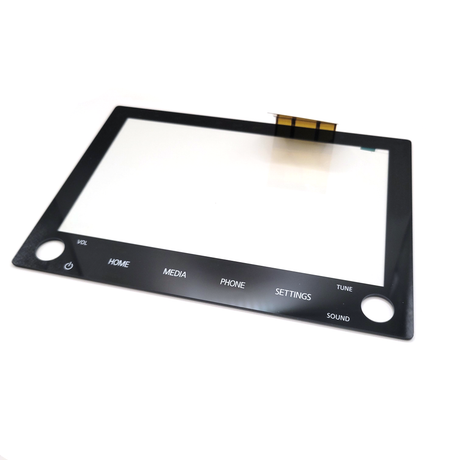
![[Premium] Upgraded Gel-Free Cadillac CUE Replacement Touch Screen Display-Cuescreens](http://www.cuescreens.com/cdn/shop/files/7c1892_b5fcaf040dfe42abb289e47b1fa91ab9_mv2.png?v=1738265347&width=460)


![[Premium] Upgraded Gel-Free Cadillac CUE Replacement Touch Screen Display-Cuescreens. Supports Proximity Sensors.](http://www.cuescreens.com/cdn/shop/files/7c1892_7faa9297eab444d5a99838357b9c178c_mv2.png?v=1764720901&width=460)