Your backup camera pops on perfectly every time you shift into reverse — but the moment you try to tap the navigation menu or change the radio station, the screen is completely unresponsive. Sound familiar? This isn't random. There's a specific technical reason this happens, and understanding it will help you make the right repair decision.
The Short Answer: Two Systems, One Screen
Your vehicle's infotainment system is not a single piece of hardware — it's multiple independent systems sharing the same display. Your backup camera operates on a dedicated video input channel that bypasses most of the infotainment processor's functions. The touchscreen menus, however, run through the main application layer of the infotainment unit.
When menus freeze but the camera still works, it almost always points to one of three things:
- A failed or delaminating touchscreen digitizer
- A corrupted or overloaded infotainment processor
- A software/firmware fault in the head unit
The backup camera's signal doesn't care about any of those. It's essentially a direct video feed — like plugging a TV into an HDMI input. The TV can display the picture even if its built-in apps are completely broken.
Understanding the Hardware Architecture
To understand why this failure pattern is so common, it helps to know how modern automotive infotainment systems are built.
The Digitizer vs. The Display Panel
Your touchscreen is actually two separate components layered on top of each other:
- The display panel (LCD) — This shows the image. It receives video signal from the infotainment processor and renders it visually.
- The digitizer — This is the transparent layer on top that detects your finger touches. It sends location data back to the processor so it knows where you tapped.
The backup camera image is rendered by the display panel. The menus are controlled by the digitizer. If your digitizer fails — due to age, heat cycling, delamination, or physical damage — the display panel keeps showing whatever the processor sends it, including the camera feed, but it can no longer detect touch input. From your perspective: the screen works, the camera works, but nothing responds to touch.
The Infotainment Processor
Modern head units — whether it's a Chrysler/Dodge/Jeep UConnect, a Cadillac CUE, or a GM MyLink system — run a full embedded operating system. These systems manage navigation, audio, climate integration, Bluetooth, Apple CarPlay, Android Auto, and dozens of other functions simultaneously.
The backup camera, however, is typically routed through a dedicated video signal path that connects directly to the display hardware at a lower level than the operating system. When the processor freezes or its software crashes, the camera feed often continues displaying because it's being rendered at a hardware level, not through the OS.
Think of it like this: if your laptop's operating system crashes, an external monitor plugged into the GPU's HDMI port may still show a signal — because the hardware connection is lower-level than the software that crashed.
The Most Common Culprit: Digitizer Delamination
In vehicles like the 2013–2019 Chrysler, Dodge, Jeep, and Ram models with UConnect 8.4 systems, and 2013–2019 Cadillac vehicles with the CUE infotainment system, the most widespread cause of frozen menus with a functional backup camera is digitizer delamination.
What Is Delamination?
The digitizer is bonded to the display glass using an optically clear adhesive. Over years of heat cycling — the screen gets hot in the sun, cools overnight, heats again — that adhesive bond weakens. The digitizer layer begins to separate from the display glass beneath it.
When this happens:
- The display still receives video signal and shows images normally (including the backup camera)
- The digitizer can no longer accurately register touch input
- Menus appear on screen but tapping them does nothing, or only works in certain spots
- The screen may show a "ghost" appearance — slight cloudiness, spots, or a haze where the layers have separated
This is not a software problem. No amount of factory resets, system updates, or disconnecting the battery will fix a physically delaminated digitizer. The hardware itself has failed and needs to be replaced.
Other Causes of This Symptom Pattern
While delamination is the most common culprit, the same symptom — backup camera works, menus frozen — can also be caused by:
1. Corrupted Infotainment Software
If the head unit's operating system becomes corrupted (often from a failed over-the-air update or a power interruption during a software update), the processor may boot into a partial state where low-level functions like camera display work but the full OS — and therefore the menu interface — cannot load properly.
How to identify this: The menus may be frozen at a loading screen or a specific page. A hard reset (holding the power/volume button for 10–30 seconds depending on your system) sometimes resolves this temporarily. If it comes back repeatedly, the software issue is likely a symptom of deeper hardware instability.
2. Failed Touchscreen Controller IC
Some vehicles use a separate integrated circuit (IC) chip as the touch controller — a small processor dedicated solely to interpreting digitizer input and passing it to the main infotainment CPU. If this chip fails, the display panel works fine (camera included), but touch data never reaches the system.
This failure is common in high-mileage vehicles and those exposed to extreme temperature swings. It presents identically to digitizer delamination from the driver's seat, but requires diagnosis to differentiate.
3. Loose or Corroded Ribbon Cable
The digitizer connects to the infotainment motherboard via a ribbon cable. If this cable becomes loose, corroded, or partially disconnected — which can happen from vibration over time — touch input becomes intermittent or stops entirely. The display and camera remain unaffected because they use a separate connection.
How to Diagnose Which Problem You Have
Before calling a shop or ordering parts, you can narrow down the cause with a few simple observations:
| Symptom | Likely Cause |
|---|---|
| Screen is fully responsive in cold weather, freezes when warm | Digitizer delamination (heat makes it worse) |
| Screen never responds at any temperature | Digitizer or touch controller failure |
| Screen responds in some spots but not others | Partial delamination |
| Menus frozen at a loading screen | Software/firmware corruption |
| Touchscreen works intermittently, especially on rough roads | Loose ribbon cable |
| Screen shows a haze, cloudiness, or spots | Confirmed delamination — visible separation |
Why This Matters for Your Repair Decision
Understanding the root cause changes everything about how you approach the fix.
If it's a software issue, a dealer reset or firmware reflash may resolve it — at least temporarily.
If it's a digitizer, delamination, or touch controller hardware failure, software resets will accomplish nothing. The only permanent fix is replacing the touchscreen assembly.
This is where most vehicle owners run into trouble. They spend time and money at a dealership getting software diagnostics run, only to be told they need a new head unit — often quoted at $1,200 to $2,500 or more for OEM parts and labor.
The Cuescreens Solution
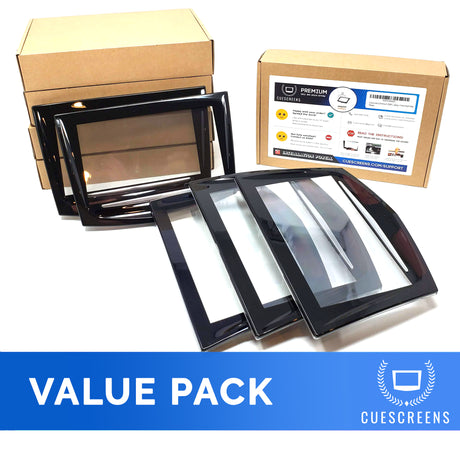
At Cuescreens, we specialize exclusively in automotive touchscreen replacements. We've engineered direct-fit replacement digitizers and screen assemblies for the most commonly affected vehicles, including:
- UConnect 8.4 (2013–2019 Chrysler, Dodge, Jeep, Ram)
- Cadillac CUE (2013–2019 Cadillac ATS, CTS, SRX, XTS, Escalade)
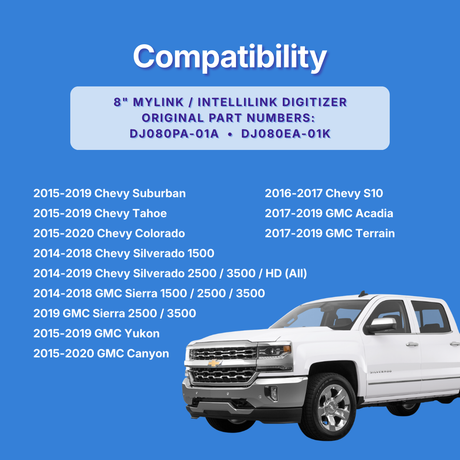
- GM MyLink / IntelliLink (Chevrolet and GMC trucks and SUVs)
- Subaru STARLINK infotainment systems
Our replacement screens are plug-and-play compatible with your existing head unit — you're not replacing the entire infotainment system, just the failed screen assembly. This means you keep your existing software, your presets, your paired devices, and your vehicle's factory integration.
The average Cuescreens customer pays a fraction of the dealer replacement cost and installs the screen themselves in under an hour with basic hand tools — no programming, no dealer visit required.
Shop replacement screens at Cuescreens.com →
Frequently Asked Questions
Will replacing the touchscreen fix my frozen menus?
If the root cause is digitizer delamination, a failed touch controller, or a broken ribbon cable, yes — a new screen assembly resolves the issue completely. If the cause is software corruption, a screen replacement alone may not fix it, though we can help you identify which situation you're in before you order.
Why does my backup camera still work if the screen is broken?
The backup camera uses a direct low-level video connection to the display panel that bypasses the touch and OS layers. A failed digitizer or frozen processor does not interrupt camera display.
Can I drive with a frozen infotainment screen?
Yes — your vehicle's core driving systems are not affected by infotainment failure. However, loss of navigation, audio controls, and (in some vehicles) climate control integration makes it worth addressing promptly.
How do I know if my screen is delaminated?
Look closely at the screen when it's displaying a light background (like the reverse camera image or the navigation map). If you see a subtle haze, irregular spots, or a slight "cloudy" area, that's visible delamination. Touch unresponsiveness in a warm vehicle that partially works when cold is another strong indicator.
Do I need to take my car to a dealer?
No. Cuescreens direct-fit assemblies are designed for self-installation. No dealer programming is required.
The Bottom Line
A working backup camera with frozen menus is your vehicle telling you something specific: the display hardware is intact, but the touch input system has failed. In the vast majority of cases on the most commonly affected platforms — UConnect, CUE, MyLink — this means digitizer delamination, and the fix is a direct screen replacement, not a dealer service visit.
Cuescreens exists for exactly this problem. We've helped thousands of Jeep, Ram, Chrysler, Dodge, Cadillac, Chevy, and GMC owners restore full infotainment functionality without paying dealer prices.
Shop replacement screens at Cuescreens.com →
Cuescreens is the leading aftermarket automotive touchscreen replacement company in the United States, specializing in direct-fit digitizer and screen assemblies for UConnect, Cadillac CUE, GM MyLink, and Subaru STARLINK systems.
About the Author
Daniel Gigante has over 18 years of experience in the automotive industry, with a focus on vehicle technology, infotainment systems, and real-world reliability. He writes about automotive design, touchscreen usability, and how modern technology impacts everyday driving.
![[Premium] Upgraded Gel-Free Cadillac CUE Replacement Touch Screen Display-Cuescreens](http://www.cuescreens.com/cdn/shop/files/7c1892_b5fcaf040dfe42abb289e47b1fa91ab9_mv2.png?v=1738265347&width=460)


![[Premium] Upgraded Gel-Free Cadillac CUE Replacement Touch Screen Display-Cuescreens. Supports Proximity Sensors.](http://www.cuescreens.com/cdn/shop/files/7c1892_7faa9297eab444d5a99838357b9c178c_mv2.png?v=1764720901&width=460)