If you’ve ever dealt with a bubbling, cracking, or “ghost-touching” infotainment screen, you’ve probably wondered if something as simple as window tint could have prevented it. With dashboard screens becoming more expensive and more failure-prone, especially in modern vehicles, understanding how UV exposure impacts your screen is critical.
What Causes Dashboard Screen Failure?
Most factory infotainment systems rely on layered components, including an LCD display, a digitizer, and often an adhesive layer like Optical Clear Adhesive (OCA). Over time, heat and ultraviolet (UV) radiation break down these materials.
- UV radiation degrades adhesives and plastics
- Heat buildup softens bonding layers, leading to delamination
- Moisture + UV accelerates internal chemical breakdown
This is why you often see screens fail first around the edges. The damage starts small and spreads across the entire display.
How Window Tint Works
Window tint isn’t just about privacy or aesthetics. High-quality automotive tint is designed to block a significant portion of harmful solar radiation.
- Blocks up to 99% of UV rays
- Reduces infrared heat inside the cabin
- Lowers interior temperatures by 10–30°F depending on conditions
There are several types of tint, including dyed, metalized, carbon, and ceramic. Ceramic tint offers the best overall protection because it blocks both UV and infrared heat without interfering with electronics.
Does Window Tint Actually Protect Your Screen?
Yes — but it’s not a complete solution.
Window tint helps reduce two of the biggest contributors to screen failure: UV exposure and heat. By lowering cabin temperatures and limiting radiation, tint slows down the degradation of adhesives and internal components.
However, it does not eliminate the problem entirely. Here’s why:
- Heat still builds up inside parked vehicles, especially in direct sunlight
- Dashboard materials absorb and radiate heat toward the screen
- Factory screens often use lower-grade adhesives that fail regardless over time
In real-world terms, tint can delay failure, but it usually won’t prevent it permanently.
Real Data: Interior Heat vs. Screen Damage
Even with window tint, vehicle interiors can reach extreme temperatures:
- Untinted car in sun: 130–150°F interior temps
- Tinted car (ceramic): 110–125°F interior temps
While that reduction is significant, it’s still well above the threshold where adhesives begin to soften and fail. Most OCA materials start degrading around 140°F, and repeated exposure accelerates long-term damage.
What Tint Helps With Most
Window tint is most effective in slowing down:
- Yellowing or fading of screen coatings
- Early-stage adhesive breakdown
- Micro-cracking caused by thermal cycling
It is less effective at preventing:
- Full delamination in known failure-prone systems
- “Ghost touch” caused by digitizer failure
- Long-term adhesive separation in high-heat climates
Best Practices to Protect Your Dashboard Screen
If you want to maximize the lifespan of your infotainment system, window tint should be part of a broader strategy:
- Install ceramic window tint for maximum UV and heat rejection
- Use a sunshade when parked in direct sunlight
- Park in shade or garages whenever possible
- Avoid prolonged exposure during peak heat hours
Why Some Screens Still Fail (Even With Tint)
Many OEM infotainment systems were not engineered for long-term durability under extreme heat conditions. Certain models, like Cadillac CUE and other 2016–2020 systems, are particularly known for adhesive-related failures.
In these cases, even the best preventative measures can only slow the inevitable. The underlying issue is often the material design itself.
TL;DR
Window tint absolutely helps protect your dashboard screen by reducing UV exposure and lowering cabin temperatures. It can extend the life of your screen and delay common failure modes like bubbling and delamination.
But it’s not a silver bullet.
If your vehicle uses a failure-prone screen design, tint will buy you time — not immunity. For long-term reliability, upgrading to a higher-quality replacement screen with improved materials is often the only permanent fix.
At Cuescreens, we design replacement touchscreens specifically to withstand the heat and UV conditions that cause OEM failures in the first place. That means no gel-based adhesives, better clarity, and long-term durability built for real-world conditions.
About the Author
Daniel Gigante has over 18 years of experience in the automotive industry, with a focus on vehicle technology, infotainment systems, and real-world reliability. He writes about automotive design, touchscreen usability, and how modern technology impacts everyday driving.
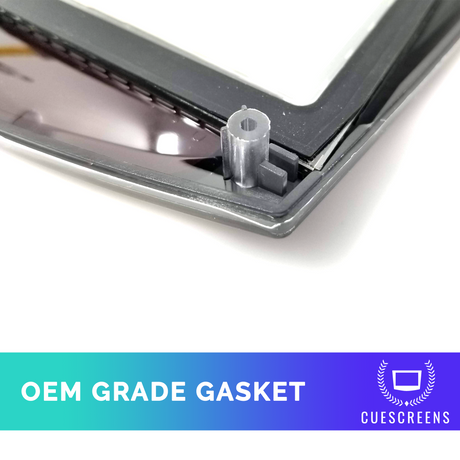
![[Premium] Upgraded Gel-Free Cadillac CUE Replacement Touch Screen Display-Cuescreens](http://www.cuescreens.com/cdn/shop/files/7c1892_b5fcaf040dfe42abb289e47b1fa91ab9_mv2.png?v=1738265347&width=460)


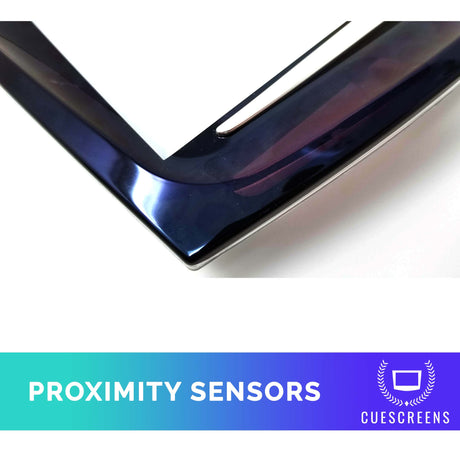
![[Premium] Upgraded Gel-Free Cadillac CUE Replacement Touch Screen Display-Cuescreens. Supports Proximity Sensors.](http://www.cuescreens.com/cdn/shop/files/7c1892_7faa9297eab444d5a99838357b9c178c_mv2.png?v=1764720901&width=460)