If your car’s screen is tapping buttons on its own, opening apps, or changing settings without you touching it, you’re experiencing what’s known as ghost touch. It feels random, but it isn’t. There’s real science behind it.
What Is Ghost Touch?
Ghost touch happens when a touchscreen registers input that isn’t coming from your finger. The system believes it’s being touched when it’s not.
In vehicles, this usually looks like:
- Random button presses
- Menus opening on their own
- Volume or navigation changing without input
- Unresponsive areas mixed with phantom taps
In most cases, this is not a software issue. It’s a hardware failure.
How Capacitive Touchscreens Work
Most modern vehicles use capacitive touchscreens, similar to smartphones.
Here’s how they work:
- The screen contains a grid of conductive layers
- An electrical field is constantly maintained across the surface
- Your finger disrupts that field
- The system calculates the location of the change
That disruption is what registers as a “touch.”
What Causes Ghost Touch?
Ghost touch occurs when something other than your finger interferes with the electrical field and mimics a real input.
1. Electrical Interference
Vehicles generate constant electrical activity from alternators, wiring systems, and control modules.
If shielding weakens or components degrade, this can:
- Distort the touchscreen signal
- Create false touch points
- Trigger inputs without physical contact
2. Digitizer Failure
The digitizer is the layer responsible for detecting touch. Over time, it can degrade due to heat, pressure, or manufacturing weaknesses.
When it starts to fail, it can send incorrect signals, which the system interprets as touches.
3. Heat and Material Breakdown
Vehicle interiors regularly reach temperatures between 120°F and 140°F. This heat accelerates wear on touchscreen materials.
In many factory systems, an adhesive layer is used between the screen components. Over time, this layer can break down, leading to:
- Loss of signal accuracy
- Erratic touch behavior
- Ghost inputs
4. Moisture and Contamination
Humidity and internal condensation can interfere with the electrical field of the screen.
This creates inconsistent conductivity, which can result in false touch signals.
Why It Gets Worse Over Time
Ghost touch rarely starts as a major issue. It typically begins with occasional random inputs and gradually becomes constant.
That’s because the underlying problem, whether it’s material breakdown or electrical instability, continues to worsen with use, heat, and time.
Why Dealerships Replace the Entire Unit
Most dealerships do not repair individual components like the digitizer. Instead, they replace the entire infotainment unit.
This often results in repair quotes ranging from $1,500 to $3,500, even though the failure is usually isolated to the touchscreen layer.
The Better Approach
In most cases, ghost touch can be resolved by replacing just the touchscreen digitizer rather than the entire system.
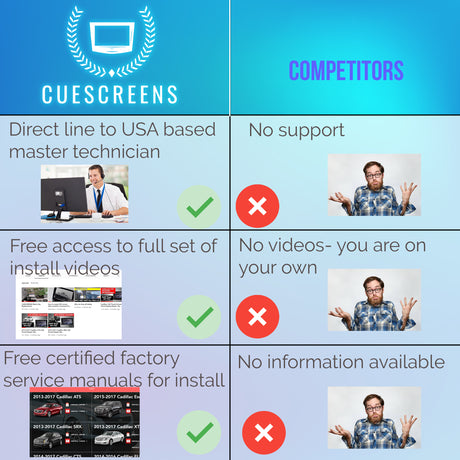
At Cuescreens, we specialize in upgraded, gel-free replacement touchscreens designed to eliminate common failure points like electrical interference and adhesive breakdown.
This allows vehicle owners to restore full functionality without paying dealership prices or replacing perfectly working components.
Final Thoughts
Ghost touch isn’t random. It’s the result of electrical interference, material degradation, and hardware failure inside the screen.
Understanding the cause is the first step to fixing it the right way, without overpaying or replacing more than necessary.
About the Author
Daniel Gigante has over 18 years of experience in the automotive industry, with a focus on vehicle technology, infotainment systems, and real-world reliability. He writes about automotive design, touchscreen usability, and how modern technology impacts everyday driving.
![[Premium] Upgraded Gel-Free Cadillac CUE Replacement Touch Screen Display-Cuescreens](http://www.cuescreens.com/cdn/shop/files/7c1892_b5fcaf040dfe42abb289e47b1fa91ab9_mv2.png?v=1738265347&width=460)


![[Premium] Upgraded Gel-Free Cadillac CUE Replacement Touch Screen Display-Cuescreens. Supports Proximity Sensors.](http://www.cuescreens.com/cdn/shop/files/7c1892_7faa9297eab444d5a99838357b9c178c_mv2.png?v=1764720901&width=460)