That cloudy, milky haze spreading across your infotainment display is not just an eyesore. It is delamination, and it only gets worse from here. Here is what you can expect if you leave it alone, and why most people decide to replace it sooner rather than later.
What Is Screen Delamination?
Your vehicle's touchscreen display is made up of multiple bonded layers: the outer glass or plastic digitizer that registers your touch, an adhesive layer, and the display panel behind it. Delamination happens when that adhesive bond breaks down. Heat, UV exposure, humidity, and age all accelerate the process.
You will usually notice it first as a foggy or cloudy area near the edges or corners of the screen. Some vehicles show bubbling. Others develop a distinctly milky sheen across a growing portion of the display. It looks similar to what happens when a screen protector starts to lift, except it is happening inside the display assembly itself.
Stage 1: Annoying but Manageable
In the early stages, delamination might only affect a corner or a thin strip along one edge. The rest of the screen still works, the image is still readable, and touch response is unaffected in the clear areas. Most people at this stage decide to wait and see.
That is understandable, but it is worth knowing that the wait-and-see approach almost always ends the same way. The affected area grows.
Stage 2: Visibility and Usability Start to Suffer
As delamination spreads toward the center of the screen, the practical problems multiply. Navigation becomes harder to read. Audio controls that live in the delaminated zone become difficult to see. If your vehicle routes the backup camera feed through the infotainment display, a clouded screen makes reversing more dangerous.
Glare gets worse too. Delaminated areas scatter light differently than intact bonded layers, which means direct sunlight turns the affected portion of your screen into a near-opaque white patch. This is typically when drivers stop debating and start looking for a replacement.
Stage 3: The Display Becomes Largely Unusable
Left long enough, delamination can cover the majority of the screen. At that point the display is essentially non-functional as a touchscreen interface. Warnings, alerts, climate controls, and any system that relies on the screen to communicate information are all compromised.
There is also a secondary failure mode to be aware of. As moisture infiltrates the gap created by the failed adhesive, it can cause electrical damage to the display panel itself. What started as a cosmetic adhesive issue can become a panel failure that is more expensive to address.
Can You Repair It Instead of Replacing It?
There are services that attempt to re-bond delaminated screens. The results are inconsistent. Re-bonding in a non-controlled environment almost always introduces air bubbles or dust between the layers, which creates new visual defects. The adhesives used in the original factory bonding process are applied under specific temperature and pressure conditions that cannot be replicated in the field.
For most drivers, a full replacement assembly is the more reliable fix. A replacement that comes with the digitizer and display panel already factory-bonded eliminates the risk of a failed repair and delivers a result that looks and performs like a new screen.
What About the Dealership?
Dealer quotes for touchscreen replacements tend to be high. Depending on the vehicle, you may be looking at several hundred to over a thousand dollars in parts and labor. Some manufacturers have addressed widespread delamination issues through technical service bulletins or extended warranty programs, but coverage varies significantly by make, model, and year, and many owners fall outside the eligible window.
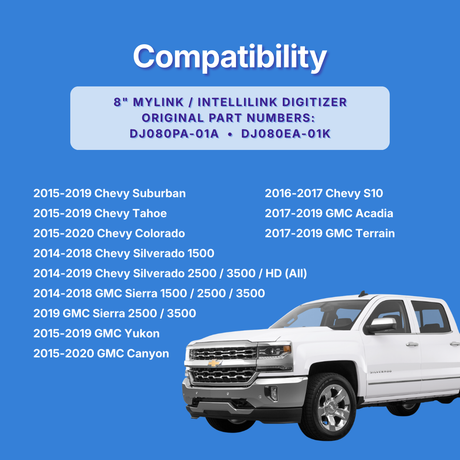
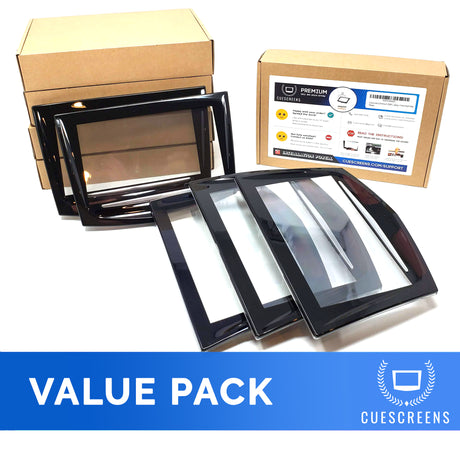
Cuescreens sells OEM-quality direct-fit replacement touchscreen assemblies for a wide range of vehicles, including GM and Chevy, Cadillac, Jeep, RAM, Chrysler, Subaru, Mazda, Hyundai, Kia, Honda, Acura, Volkswagen, and Buick. The assemblies are built to fit and function like the original and install with basic hand tools.
The Short Answer
Ignoring a delaminating car screen does not make the problem stop. It makes it bigger. What starts as a cloudy patch in one corner will eventually cover enough of the display to affect navigation, backup camera visibility, and system alerts. The longer it goes, the greater the risk of moisture damage turning a cosmetic problem into a panel-level failure.
If your screen is already showing early signs of delamination, the time to replace it is before it becomes a safety issue, not after.
Frequently Asked Questions
Can a delaminating car screen fix itself?
No. Delamination is a physical separation of the screen layers caused by adhesive failure, heat, UV exposure, or age. Once it starts, it will continue to spread. There is no way to reverse the process without replacing the display assembly.
Is it safe to drive with a delaminating touchscreen?
It depends on how far the delamination has progressed. Early-stage delamination may not affect driving immediately, but as it spreads it can obscure your backup camera feed, navigation display, and warning indicators, which creates real safety concerns.
How fast does screen delamination spread?
The rate varies depending on climate, how often the vehicle is exposed to direct sunlight, and how severe the initial adhesive failure is. In hot climates with frequent sun exposure, delamination can spread from a small cloudy patch to most of the screen within one to two summers.
Will a dealership fix a delaminating screen under warranty?
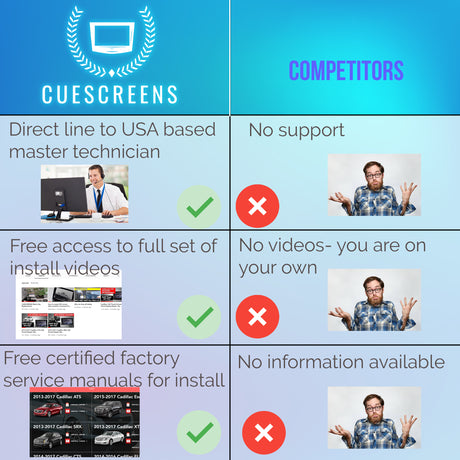
Some delamination issues have been covered under manufacturer defect campaigns or extended warranties, depending on the make and model. However, many owners are quoted high out-of-pocket costs at dealerships. A direct OEM-quality replacement from Cuescreens is typically a fraction of the dealer price and installs with basic hand tools.
What vehicles are most prone to touchscreen delamination?
Delamination has been widely reported across many makes and models, including GM and Chevy trucks and SUVs, Cadillac infotainment displays, Jeep, RAM, and Chrysler vehicles with Uconnect screens, and Subaru, Mazda, Hyundai, Kia, Honda, Acura, and Volkswagen models. Cuescreens offers direct-fit replacement assemblies for these vehicles.
![[Premium] Upgraded Gel-Free Cadillac CUE Replacement Touch Screen Display-Cuescreens](http://www.cuescreens.com/cdn/shop/files/7c1892_b5fcaf040dfe42abb289e47b1fa91ab9_mv2.png?v=1738265347&width=460)


![[Premium] Upgraded Gel-Free Cadillac CUE Replacement Touch Screen Display-Cuescreens. Supports Proximity Sensors.](http://www.cuescreens.com/cdn/shop/files/7c1892_7faa9297eab444d5a99838357b9c178c_mv2.png?v=1764720901&width=460)