Your infotainment display looks fine. The picture is clear. But the screen won't respond when you tap it, or it starts doing things on its own. That's a digitizer problem, and it's more common than most people realize.
What a Digitizer Actually Does
The digitizer is the transparent sensing layer bonded to the front of your touchscreen. It's what converts a physical touch into an input signal the infotainment system can read. It sits between the glass surface and the display panel, and under normal circumstances you'd never know it was there.
When it works, every tap, swipe, and pinch registers exactly as intended. When it starts to fail, the system the ability to accurately interpret touch input, even though the display itself may still be working perfectly.
Symptoms of a Failing Digitizer
Digitizer failure doesn't always look the same. The symptoms depend on how far along the failure is and which part of the digitizer layer is affected.
Ghost Touch
Ghost touch is one of the most disruptive symptoms. The screen registers inputs that were never made. Menus open by themselves. The volume changes without anyone touching it. Navigation starts rerouting on its own. This happens because the digitizer is generating false signals, usually due to a damaged or degraded sensing layer.
Dead Zones
A dead zone is exactly what it sounds like: a section of the screen that no longer responds to touch. You can press on it repeatedly and nothing happens. The display in that area still shows content correctly. The digitizer layer covering that region has simply stopped functioning.
Dead zones often appear in high-use areas first. The corners and the lower third of the screen, where volume and climate controls typically live, tend to fail before other regions because they absorb the most contact over time.
Erratic or Delayed Response
Before a digitizer fully fails, it often goes through a period of degraded performance. Taps register in the wrong location. Inputs take a second or two to respond. A swipe meant to scroll a menu instead triggers a button press. This inconsistency is a reliable early warning sign.
Touch Sensitivity That Changes With Temperature
Heat accelerates digitizer degradation. A common pattern is a screen that behaves normally when the car is cool, then becomes erratic or unresponsive after the cabin heats up. If your screen gets worse on hot days or after sitting in a parking lot, thermal stress on the digitizer is the likely cause.
Why Digitizers Fail
Automotive touchscreens live in a harsh environment. Repeated thermal cycling, UV exposure, vibration, and years of physical contact all wear on the digitizer layer over time.
Age and Wear
The digitizer's sensing film has a finite lifespan. Vehicles from the 2015 to 2022 model years are now reaching the point where factory digitizers are showing wear at scale. This isn't a defect in the traditional sense. It's a component reaching the end of its service life.
Heat Damage
Dashboards can reach temperatures well above 150 degrees Fahrenheit in direct sunlight. The adhesive layers and sensing film in a digitizer are not immune to that kind of sustained heat exposure. Over time, heat causes delamination between layers, breaks down the sensing material, and creates the conditions for both ghost touch and dead zones.
Physical Impact
A crack or hard impact, even one that doesn't visibly shatter the glass, can damage the digitizer layer underneath. The digitizer is thin and fragile relative to the glass above it. A sharp tap or a dropped object can cause failure in a localized area without leaving obvious external damage.
Manufacturing Variation
Some OEM digitizer assemblies from certain model years have shown higher failure rates than others. If your vehicle's infotainment screen is a known problem unit, you may see digitizer issues earlier than you'd expect based on mileage or age alone.
What Doesn't Fix a Failed Digitizer
There's a lot of bad advice floating around about touchscreen problems. A few things to be clear about:
Screen Cleaners and Protectors
A cleaning cloth and a screen protector address the surface. They have no effect on a failing digitizer underneath. If ghost touch or dead zones are already present, adding a screen protector won't change anything.
Software Resets
A factory reset or software update can sometimes resolve touch issues caused by a software glitch. But if the digitizer layer itself is physically degraded, no software change will fix it. You can rule out software as a cause by attempting a reset. If the problem comes back or never went away, you're looking at hardware.
Recalibration
Some infotainment systems offer a touchscreen calibration mode. Calibration adjusts how the system interprets input signals, but it can't compensate for a digitizer that's generating false signals or failing to generate any signal at all in dead zones.
The Right Fix: Full Assembly Replacement
Digitizers in automotive screens are not sold or installed as standalone components in the aftermarket. They are bonded to the display panel as part of a single assembly. Attempting to separate and replace only the digitizer layer requires specialized equipment, is prone to causing additional damage, and is rarely cost-effective.
The practical solution is a complete touchscreen assembly replacement. The entire unit, display panel and digitizer bonded together, is swapped out as one piece. This is also how OEM service centers handle the repair.
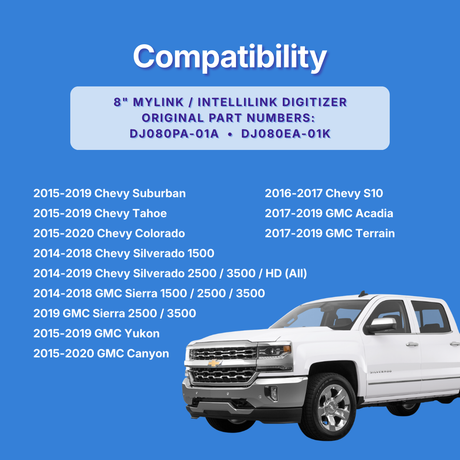
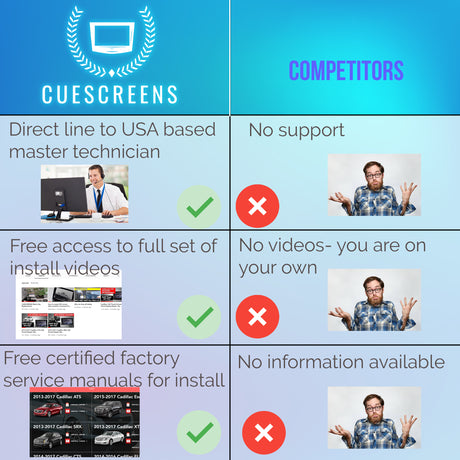
Cuescreens replacement screens are complete assemblies built to OEM specifications. They're new, not refurbished, and are vehicle-specific so fitment is direct. If your screen is showing any of the symptoms described above, browse replacement options for your vehicle at cuescreens.com.
Dealer vs. Aftermarket Replacement Cost
Dealer pricing for a touchscreen replacement typically runs between $800 and $1,500 or more, depending on the vehicle. That figure includes a significant markup on the part itself plus labor charges.
An aftermarket replacement from Cuescreens is substantially less expensive. The screens are OEM-quality and vehicle-specific. Many owners complete the installation themselves in a couple of hours, eliminating the labor cost entirely.
| Repair Option | Typical Cost | Part Quality | Turnaround |
|---|---|---|---|
| Dealership replacement | $800 to $1,500+ | OEM | Days to weeks (parts ordering) |
| Independent shop | $400 to $900 | Varies | 1 to 5 days |
| Cuescreens DIY replacement | Significantly less | OEM-quality, new | Ships fast, install in hours |
Frequently Asked Questions
What does a digitizer do in a car touchscreen?
The digitizer is the transparent layer bonded to the front of the display. It detects touch input and translates it into commands the infotainment system can execute. Without a functioning digitizer, the screen may display content correctly but fail to register or accurately process touch.
Can a failing digitizer damage the rest of the infotainment system?
In most cases, no. The digitizer is a discrete component. A failing digitizer typically does not cause damage to the display panel or the infotainment head unit. However, ghost touch events can trigger unintended inputs, which in some vehicles may cause minor software glitches.
Is ghost touch always a digitizer problem?
Ghost touch is almost always caused by a failing digitizer or interference at the digitizer layer. In rare cases, a software bug or loose internal connector can produce similar symptoms, but hardware failure at the digitizer is the most common cause in automotive screens.
Can I drive safely with a failed digitizer?
The vehicle will operate normally. A failed digitizer does not affect engine, transmission, or safety systems. That said, losing access to navigation, climate controls, and audio through the touchscreen is a real inconvenience, and ghost touch events can be distracting while driving.
Does Cuescreens sell replacement screens that include a new digitizer?
Yes. Cuescreens replacement screens are complete assemblies that include the display panel and digitizer bonded together. You are not just replacing the glass layer. You are replacing the entire front assembly as a unit, which is the correct repair for a digitizer failure.
How long does a digitizer replacement take?
For most vehicles, a full touchscreen assembly replacement takes between one and three hours depending on how the head unit is mounted and how much dash disassembly is required. Many owners complete the repair themselves using basic hand tools.
Bottom Line
A failing digitizer is a hardware problem that won't improve on its own. Whether you're dealing with ghost touch, dead zones, erratic response, or all three, the screen is telling you the digitizer layer has reached the end of its life. The fix is a full assembly replacement, and it's simpler and more affordable than going through a dealer.
Find the right replacement screen for your vehicle at cuescreens.com.
![[Premium] Upgraded Gel-Free Cadillac CUE Replacement Touch Screen Display-Cuescreens](http://www.cuescreens.com/cdn/shop/files/7c1892_b5fcaf040dfe42abb289e47b1fa91ab9_mv2.png?v=1738265347&width=460)


![[Premium] Upgraded Gel-Free Cadillac CUE Replacement Touch Screen Display-Cuescreens. Supports Proximity Sensors.](http://www.cuescreens.com/cdn/shop/files/7c1892_7faa9297eab444d5a99838357b9c178c_mv2.png?v=1764720901&width=460)