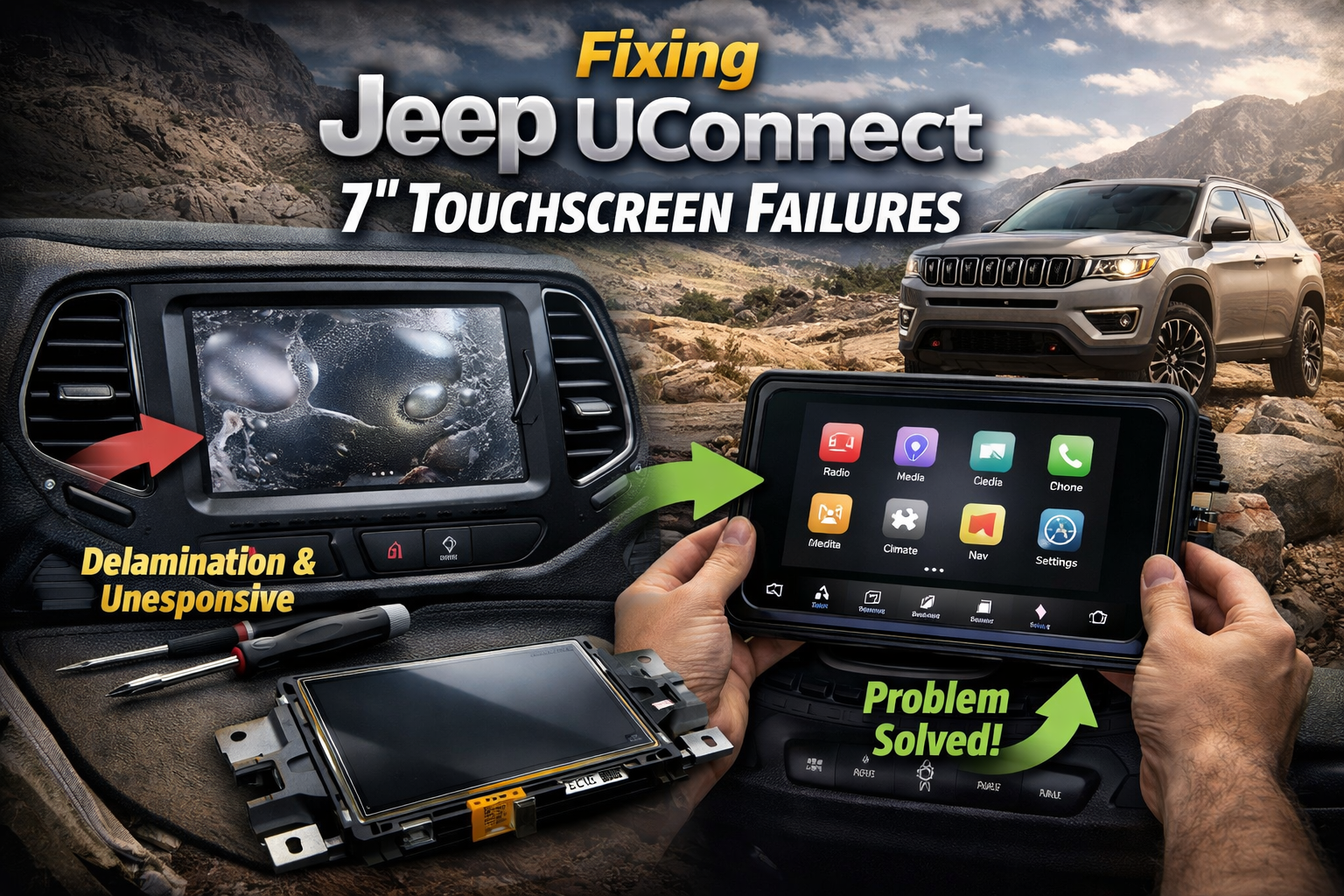
The infotainment system is one of the most important features in modern vehicles—but when it fails, it can be incredibly frustrating. Owners of the Jeep Compass and Jeep Renegade equipped with the UConnect 4/4C 7-inch touchscreen have reported persistent issues ranging from unresponsive displays to distorted graphics and total screen failure.
In this comprehensive guide, we explore the real reasons these screens fail and how you can permanently fix the problem with a quality replacement part.
Common Failure Symptoms
Owners commonly report one or more of the following issues with the UConnect 4/4C 7” touchscreen:
- Bubbling or delaminating screen layers
- Black & white vertical lines or partial blackouts
- Unresponsive touch controls
- Discolored or distorted visuals
-
Total screen failure or frequent ghost touches
These problems are documented across owner forums and repair discussions.
What’s Really Causing These Touchscreen Failures?
1. Delamination and Adhesive Breakdown
One of the most common root causes is delamination, where the layers of the display begin to separate from each other or from the touchscreen surface. Moisture, heat cycling, and a poor adhesive design from the factory can allow air or moisture to get between layers, leading to bubbles, cloudy areas, and unresponsive touch zones.
2. Faulty Digitizer or Touch Sensor
In many cases, the digitizer (the component that senses touch input) begins to fail over time. When this happens, touch areas can stop responding entirely or register phantom inputs (“ghost touches”).
3. Quality Control Variations at the Factory
Some screens simply used inferior components or manufacturing methods that were more prone to long-term failure. Forums are full of owners experiencing this prematurely, even when mileage is relatively low.
4. Heat & Environmental Stress
The dashboard of a vehicle is a harsh environment: constant temperature swings, UV exposure, and vibration can all degrade touchscreen components faster than expected. Over time this results in the symptoms above.
5. Software Doesn’t Fix Hardware Problems
While resets and software updates can temporarily resolve system glitches, they cannot restore a physically damaged or failing touchscreen. Many owners try resets with limited long-term success.
Why Dealer Replacements Are Not Always the Best Answer
Although dealerships can replace the entire infotainment head unit, this comes with major drawbacks:
- High cost – OEM head unit replacements can cost over $1,000 or more installed.
- Same design flaw – Replacing with another OEM screen means you may get the same failure again later.
- Long wait times and dealer programming fees add to the hassle.
There’s a better option that fixes the actual problem without breaking the bank.
A Permanent Fix: Replacement Touchscreen You Can Trust
If your UConnect 4/4C 7” display is failing or already unusable, consider upgrading with a high-quality replacement touchscreen designed to address the root causes listed above:
Direct replacement touchscreen for Jeep Compass & Renegade — engineered to eliminate delamination with a superior gel-free design built to last, and priced significantly lower than an OEM head unit replacement.
Product Highlights:
- Affordable alternative to dealership pricing
- Designed to prevent future delamination with patented gel-free assembly
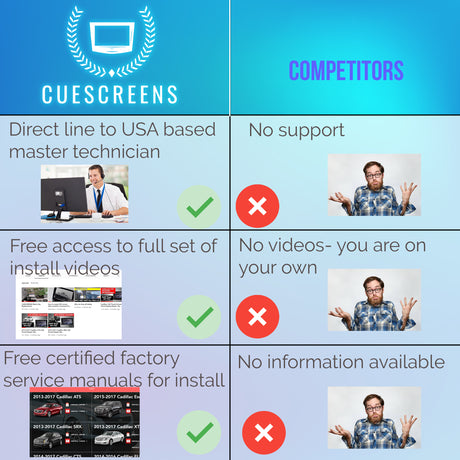
- DIY install with guided videos — no dealer programming required
- OEM-grade visuals and responsive touch performance
- 2-year warranty (upgradeable to lifetime)
-
Fits: Jeep Compass and Jeep Renegade (2017–2021) equipped with factory 7” UConnect 4/4C systems
Check it here: https://www.cuescreens.com/products/uam-replacement-uconnect-4-4c-7-touch-screen-lcd-for-compass-and-renegade
Quick Fix Attempts: What Does and Doesn’t Work
Before replacing the screen entirely, some owners try troubleshooting steps. These can help with minor software glitches, but they’re not permanent solutions for hardware failure:
Try These First:
- Soft reset: Hold volume and tuner knobs together for 10–20 seconds.
- Hard reset: Factory reset via settings menu when available.
- Battery disconnection: Remove negative terminal for several minutes.
These methods may restore functionality briefly — but they won’t stop delamination or digitizer failure.
Detailed Q&A: UConnect 4/4C 7″ Touchscreen Failure
Q: Why do these Jeep UConnect touchscreens fail so frequently?
A: The most common failure mechanism is screen delamination where the factory adhesive breaks down and allows layers to separate. Other causes include digitizer wear and exposure to heat and stress.
Q: Can software updates fix touchscreen failures?
A: Updates can help with system glitches but won’t resolve physical screen defects.
Q: Are dealer replacements reliable?
A: Dealer replacements give you a new OEM unit, but the underlying design flaws often remain.
Q: What’s the best long-term solution?
A: Installing a high-quality replacement touchscreen designed to prevent future delamination.
Q: How hard is the replacement process?
A: Many owners complete the replacement themselves using guided videos.
If you’re tired of flickering, blacked-out, or unresponsive touchscreens in your Jeep Compass or Renegade, now you know the why behind the failure—and the most effective how to fix it for good.
About the Author
Kevin Whatley is the owner of Cuescreens, a U.S.-based automotive technology company specializing in premium infotainment touchscreen replacements. Kevin has spent over thirty years working with automotive electronics, diagnosing failures and engineering reliable solutions for factory defects.
Throughout his career, Kevin has worked hands-on with vehicle electronics systems across Jeep, Chrysler, Dodge, Cadillac, Chevrolet, GMC, and others.
Through Cuescreens, Kevin focuses on solving known infotainment failure points such as delamination and ghost touch—without forcing owners into costly full radio replacements.
Kevin works closely with professional installers nationwide to ensure Cuescreens products meet or exceed OEM performance standards while delivering better long-term reliability.
![[Premium] Upgraded Gel-Free Cadillac CUE Replacement Touch Screen Display-Cuescreens](http://www.cuescreens.com/cdn/shop/files/7c1892_b5fcaf040dfe42abb289e47b1fa91ab9_mv2.png?v=1738265347&width=460)


![[Premium] Upgraded Gel-Free Cadillac CUE Replacement Touch Screen Display-Cuescreens. Supports Proximity Sensors.](http://www.cuescreens.com/cdn/shop/files/7c1892_7faa9297eab444d5a99838357b9c178c_mv2.png?v=1764720901&width=460)